

Powerful Content Creation Workflow for Solo Creators
Building an efficient content creation workflow for solo creators is the difference between burning out in six months and scaling a sustainable content empire. I’ve watched countless creators flame out because they treated content production like a chaotic sprint instead of a strategic marathon. The problem? Most solo creators waste 60% of their time switching between tasks, reinventing the wheel daily, and battling decision fatigue. This productivity drain kills momentum faster than any algorithm change ever could. The solution lives in creating a repeatable, scalable system that handles the heavy lifting so you can focus on what actually matters: creating content that resonates.
Table of Contents
- Why Solo Creator Productivity Depends on Systems, Not Hustle
- The Four-Phase Content Creation Workflow
- Phase 1: Strategic Planning (The Foundation)
- Phase 2: Content Batching (The Efficiency Multiplier)
- Phase 3: Systematic Production (The Execution Engine)
- Phase 4: Publishing System (The Consistency Machine)
- My Essential Creator Workflow Tools
- Workflow Mistakes That Tank Creator Efficiency
- Frequently Asked Questions
- My Top Recommended Gear
Why Solo Creator Productivity Depends on Systems, Not Hustle
A robust content creation workflow for solo creators transforms chaos into predictable output. Without a defined publishing system, you’re essentially gambling with your creative energy every single day. Research from the American Psychological Association confirms that decision fatigue depletes cognitive resources—which means every time you ask “what should I create today?” you’re burning mental fuel you need for actual creation.
I learned this the hard way after my first year as a solo creator. I published inconsistently, constantly switched between platforms mid-project, and wondered why my audience growth flatlined. The turning point came when I implemented a systematic content planning system that removed 90% of daily decisions. My output tripled without working more hours.
The myth that creative work can’t be systematized is BS. Every professional writer, filmmaker, and artist you admire follows processes. The difference between amateurs and pros isn’t talent—it’s workflow discipline.
The Four-Phase Content Creation Workflow
An effective creator workflow breaks content production into four distinct phases: Planning, Batching, Production, and Publishing. This framework eliminates context switching and maximizes your time in flow states. Each phase requires different mental energy, which is why separating them dramatically improves solo creator productivity.
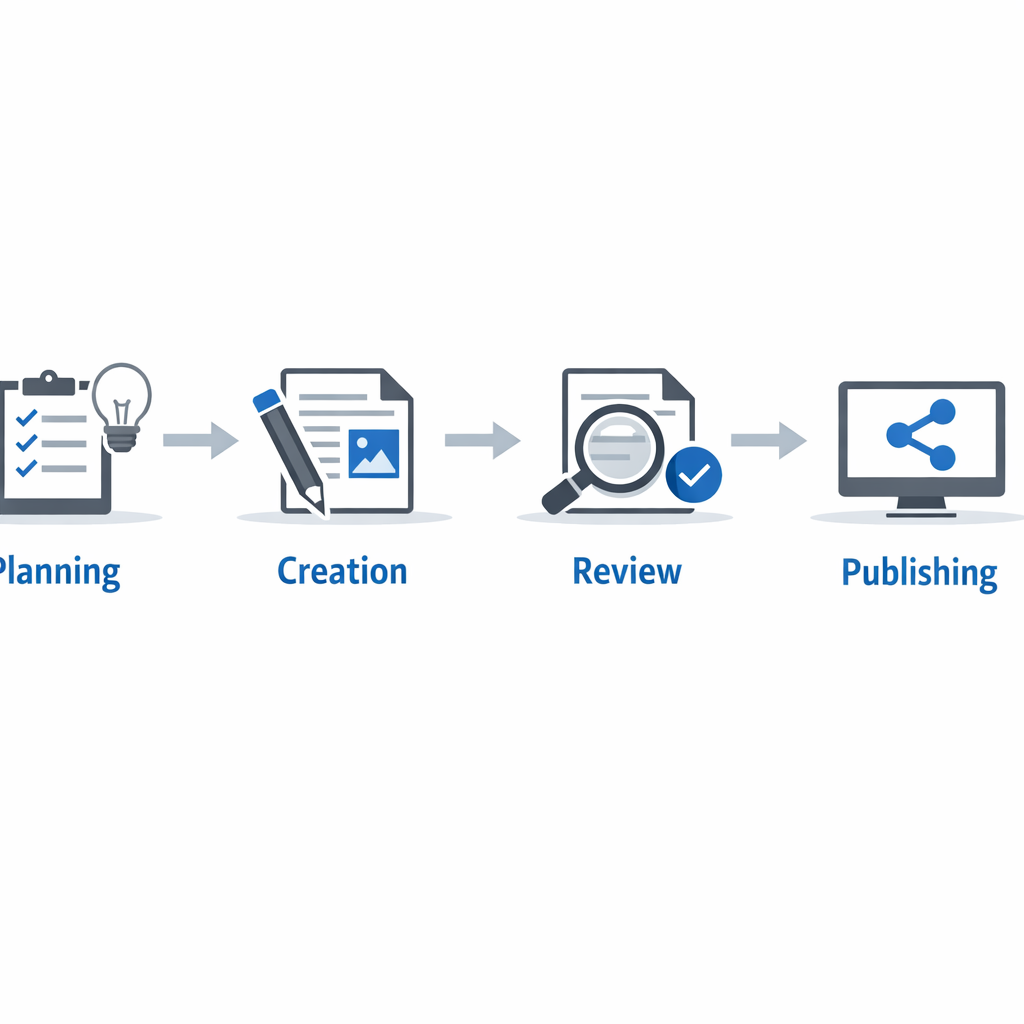
Most creators fail because they mix these phases. They plan while they produce, edit while they write, and publish reactively. This creates a cognitive traffic jam that destroys efficiency. When you isolate each phase, you build momentum and reduce the mental load of multi-tasking.
Phase 1: Strategic Planning (The Foundation)
Your content strategy starts with quarterly planning sessions. I block four hours every 90 days to map content themes, identify audience pain points, and align topics with business goals. This isn’t busy work—it’s the strategic foundation that prevents you from creating content nobody wants.
During planning, I use a simple framework: What does my audience struggle with right now? What questions keep appearing in my DMs and comments? What topics align with my revenue goals? This audience-first approach ensures every piece of content serves a purpose beyond vanity metrics.
I document everything in a master content calendar that lives in Notion. This becomes my single source of truth. When inspiration strikes at random moments, I add ideas to my running list. But I never let spontaneous ideas derail my planned content—that’s how you end up with a scattered content strategy that confuses your audience.
Need help generating ideas systematically? Check out my guide on how to come up with content ideas that actually convert.
Phase 2: Content Batching (The Efficiency Multiplier)
Content batching is the secret weapon of every prolific solo creator. The concept is simple: group similar tasks and execute them in dedicated time blocks. I film four YouTube videos in one session, write six blog posts in one week, and design a month of graphics in one afternoon.
Why does batching work? Context switching drains productivity. A study from the University of California, Irvine found that it takes an average of 23 minutes to fully regain focus after an interruption. When you batch similar tasks, you maintain deep focus and avoid this attention residue.
My batching schedule looks like this: Monday for research and outlining, Tuesday and Wednesday for writing, Thursday for filming, Friday for editing and graphics. This rhythm feels natural now, but it took three months to establish. The key is consistency—your brain starts preparing for specific tasks on specific days.
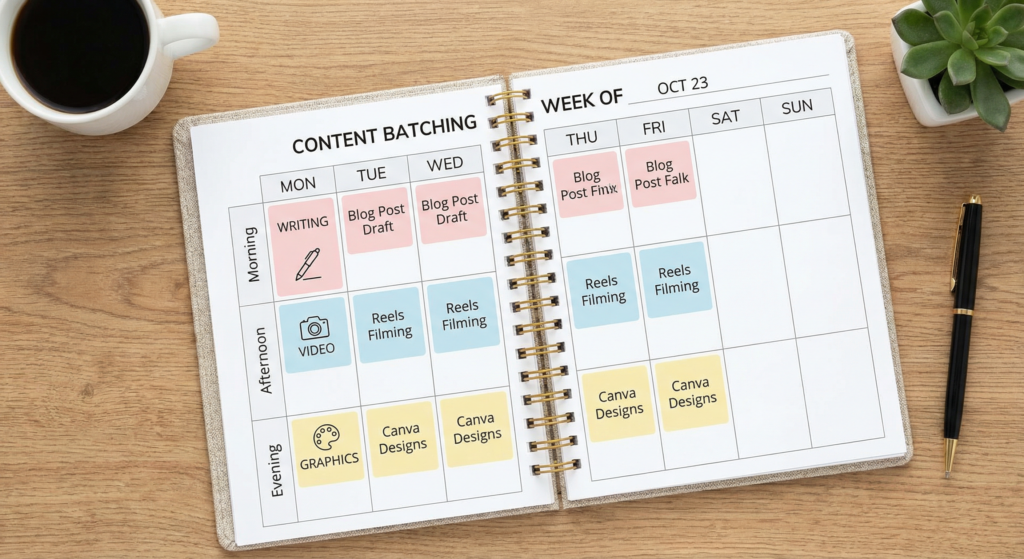
Start small if batching feels overwhelming. Batch just one content type initially. Once you experience the efficiency gains, you’ll naturally expand the system. IMO, batching is the single highest-leverage productivity hack for solo creators.
Phase 3: Systematic Production (The Execution Engine)
Production is where your content planning system meets execution. I use templates and SOPs (Standard Operating Procedures) for everything. My blog posts follow a proven structure, my videos use a repeatable filming setup, and my social posts follow format guidelines.
Templates aren’t creative constraints—they’re freedom frameworks. When you eliminate structural decisions, you free mental bandwidth for creative insights. My blog template includes: hook, problem statement, solution framework, detailed how-to sections, examples, and actionable takeaways. This structure guides readers through a predictable journey while giving me flexibility in execution.
For video production, I created a checklist that covers lighting, audio, framing, intro hooks, and CTA placement. Following this checklist means I never forget critical elements and my quality stays consistent. Consistency builds trust with audiences faster than occasional viral hits.
If you’re just getting started with systematic content creation, visit my start here guide for foundational strategies.
Phase 4: Publishing System (The Consistency Machine)
Your publishing system determines whether you maintain momentum or disappear for months. I schedule all content at least two weeks in advance using Buffer for social media and WordPress for blog posts. This buffer (pun intended) protects me from life’s inevitable chaos.
Consistency beats intensity in the long game. Publishing three times weekly for a year crushes publishing daily for a month then burning out. My publishing rhythm: Monday blog post with SEO focus, Wednesday YouTube video, Friday newsletter. This predictability trains my audience when to expect content.
Expert Commentary: This video breaks down how successful creators batch and schedule content months in advance, demonstrating practical workflow tools and real scheduling systems in action.
Analytics inform my publishing decisions, but they don’t dictate them. I review performance monthly, not daily. Obsessing over daily metrics creates emotional volatility that damages creative confidence. Monthly reviews provide enough data for pattern recognition without the noise of daily fluctuations.
Want to drive more traffic to your published content? Explore my SEO traffic strategies that compound over time.
My Essential Creator Workflow Tools
The right tools amplify your creator efficiency without adding complexity. I’m ruthlessly minimal with my tech stack because every additional tool creates maintenance overhead. Here’s what actually earns its place in my workflow:
- Notion: Content calendar, idea repository, and project management in one place
- Descript: Video and audio editing that transcribes automatically—saves hours weekly
- Canva Pro: Brand-consistent graphics without design skills
- Grammarly: Catches embarrassing typos before publication
- Buffer: Social media scheduling across all platforms
- Google Analytics: Understanding what content actually performs

The tool trap is real. New creators often collect productivity apps like Pokémon cards while avoiding actual content creation. Pick three tools maximum to start. Master them completely before adding more. Workflow optimization comes from using tools effectively, not accumulating them.
Workflow Mistakes That Tank Creator Efficiency
I’ve made every workflow mistake possible, so you don’t have to. Here are the efficiency killers I see solo creators repeat constantly:
Perfectionism paralysis: Waiting for perfect conditions, perfect ideas, or perfect execution means you never publish. Done beats perfect every time. I publish “good enough” content on schedule rather than “perfect” content eventually. Your audience values consistency over perfection.
No content buffer: Publishing the day you create content is asking for disaster. Life happens. Sickness, emergencies, and creative dry spells will disrupt production. A four-week content buffer protects your publishing consistency during chaos.
Ignoring repurposing: Creating content once for one platform is inefficient. I transform every YouTube video into a blog post, email newsletter, and six social posts. One core piece of content becomes 10+ distribution assets. This multiplication effect is how solo creators compete with teams.
Reactive creation: Chasing trends and platform algorithm changes creates unsustainable stress. I maintain 80% evergreen content and 20% timely content. Evergreen content compounds value over years while trending content provides short-term visibility.
No performance analysis: Creating without reviewing what works is like driving blindfolded. Monthly performance reviews reveal which topics resonate, which formats engage, and which distribution channels deliver ROI. Data-informed creativity beats gut-feel guessing.
Frequently Asked Questions
What is the best content creation workflow for solo creators?
The best content creation workflow for solo creators involves four core phases: strategic planning, content batching, systematic production, and scheduled publishing. This approach maximizes efficiency by grouping similar tasks together and eliminating decision fatigue. Start with quarterly planning sessions to map content themes, then batch similar creative tasks, use templates for consistent production quality, and maintain a publishing buffer of at least two weeks.
How does content batching improve solo creator productivity?
Content batching improves productivity by reducing context switching, allowing creators to stay in one creative mode longer. Research from UC Irvine shows that task switching can reduce productivity by up to 40%, making batching essential for efficiency. When you dedicate specific days to writing, filming, or editing, your brain optimizes for that particular creative mode, resulting in higher quality output in less time.
How often should solo creators publish content?
Solo creators should publish consistently based on their capacity, typically 1-3 times per week. Quality and consistency matter more than frequency. A sustainable publishing system prevents burnout while maintaining audience engagement. Choose a publishing rhythm you can maintain for years, not months. It’s better to publish weekly without fail than daily for a month before disappearing.
What tools are essential for a content creation workflow?
Essential tools for a creator workflow include a content calendar system (like Notion or Airtable), editing software appropriate to your medium, a scheduling platform (Buffer or Hootsuite), and analytics tools. However, tool minimalism is crucial—start with 3-5 core tools and master them completely before expanding your stack. The best tool is the one you’ll actually use consistently.
How do I maintain content quality with a batching system?
Maintain quality during content batching by using templates and checklists that ensure consistency, taking breaks between creative sessions to maintain fresh perspective, and scheduling review time separate from creation time. Quality doesn’t suffer from batching—it suffers from rushing. When you batch effectively, you actually have more mental energy per piece because you’re not constantly context switching.
My Top Recommended Gear
After testing dozens of tools and equipment, these are the productivity essentials that genuinely improved my content creation workflow:
1. Blue Yeti USB Microphone
Audio quality separates amateur content from professional output. The Blue Yeti delivers broadcast-quality sound without complicated audio interfaces. Whether you’re recording podcasts, YouTube videos, or voice-overs, this microphone dramatically elevates production value. It’s plug-and-play simple, which matters when you’re batching content and can’t waste time troubleshooting gear.
2. Dual Monitor Stand
Screen real estate directly impacts editing efficiency. A dual monitor setup lets me reference scripts while editing, compare versions side-by-side, and monitor analytics while writing. This seemingly simple upgrade reduced my editing time by approximately 30% because I stopped constantly switching between windows and tabs.
3. Ring Light for Video
Consistent lighting is the easiest way to improve video quality instantly. A quality ring light eliminates the guesswork from filming—no more waiting for golden hour or battling inconsistent natural light. For creators who batch video content, this consistency means you can film multiple videos in one session without worrying about lighting continuity between takes.
Disclaimer: This post contains affiliate links. As an Amazon Associate, I may earn a commission from qualifying purchases at no additional cost to you.