
Easy Affiliate Marketing Income Streams to Start (That Actually Work)
Let me cut through the noise: affiliate marketing income streams aren’t some mystical passive income fairy tale, but they’re also not a “set it and forget it” ATM machine. I’ve spent over a decade testing monetization strategies, and I can tell you which affiliate income ideas actually move the needle versus which ones waste your time. The problem? Most people chase shiny objects instead of building sustainable systems. They jump from one “make money online” scheme to another, never gaining traction. The solution starts with understanding which income streams match your skills and committing to mastering just a few proven channels before expanding.
Table of Contents
- What Are Affiliate Marketing Income Streams Really?
- Content-Based Affiliate Income (The Foundation)
- Email Marketing for Affiliate Sales
- Social Media Affiliate Strategies
- YouTube and Podcast Monetization
- Advanced Tactics That Scale
- Common Mistakes That Kill Earnings
- Frequently Asked Questions
- My Top Recommended Gear
What Are Affiliate Marketing Income Streams Really?
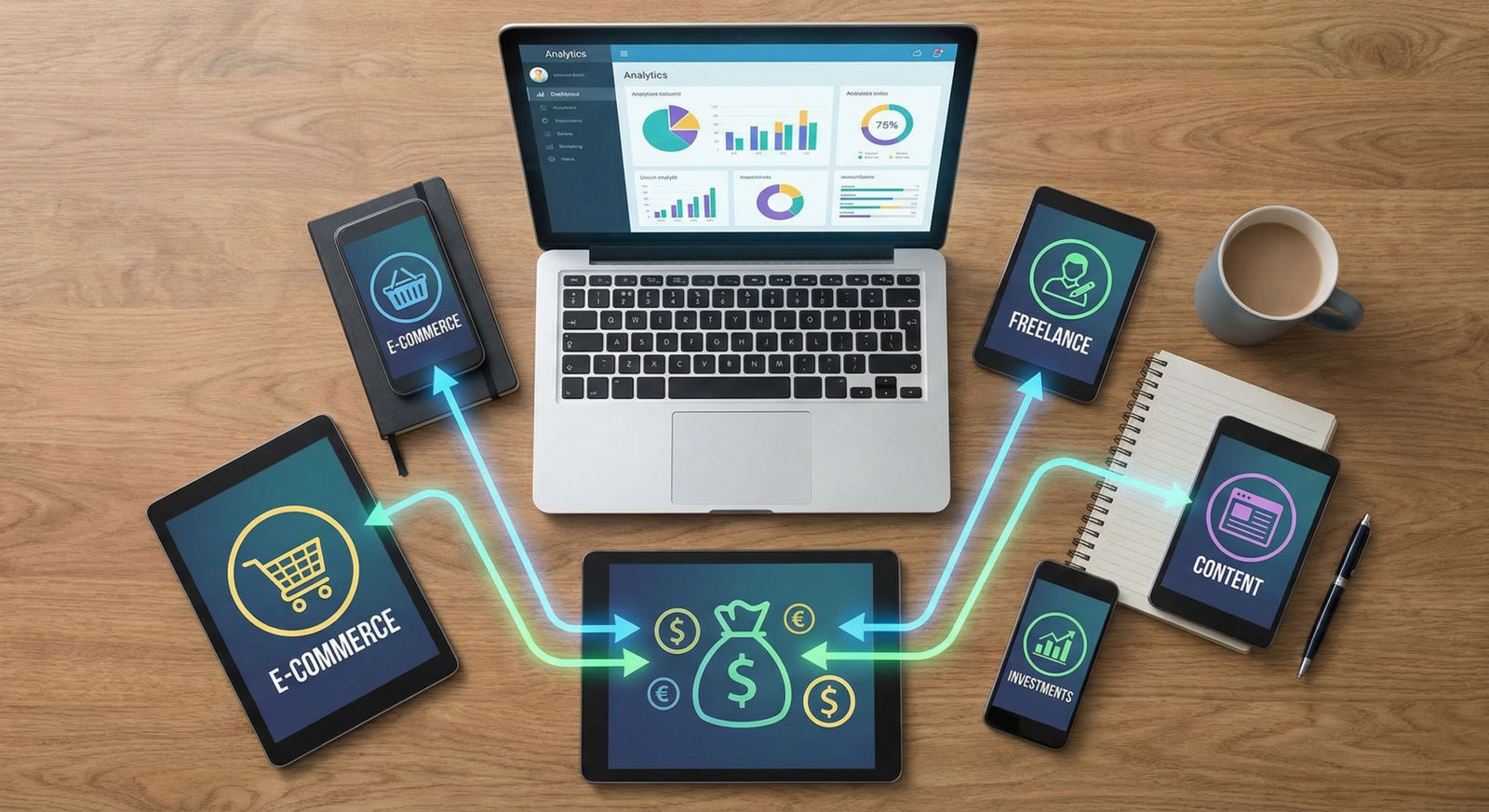
Affiliate marketing income streams are distinct channels through which you earn commissions by promoting other people’s products or services. Each stream operates independently but can feed into others when strategically connected. Think of them as different tributaries flowing into your revenue river—some trickle year-round while others surge seasonally.
Here’s what most gurus won’t tell you: diversification sounds sexy, but it’s actually how beginners dilute their efforts into mediocrity. I learned this the hard way after spreading myself across seven platforms simultaneously and earning almost nothing from any of them. The Federal Trade Commission requires affiliate disclosure regardless of your platform, so you’ll need transparency across all streams anyway.
The smartest approach? Master one primary stream until it generates consistent income, then layer in complementary channels. If you’re just getting started with online income, this sequential approach prevents burnout and compounds your learning faster.
Content-Based Affiliate Income (The Foundation)

Blogging for money through SEO-optimized content remains my highest-earning affiliate stream, generating income while I sleep. Here’s the framework I use:
- Product review articles targeting buyer-intent keywords like “best [product] for [specific need]”
- Comparison posts that pit two competing products against each other (these convert insanely well)
- Tutorial content that naturally incorporates affiliate tools as solutions to specific problems
- Resource pages that curate your top recommendations in one comprehensive guide
The myth I need to bust immediately: you don’t need thousands of articles to make serious money. I have a single blog post that’s earned over $47,000 in affiliate commissions over three years because it ranks #1 for a high-value commercial keyword. Quality and strategic keyword selection beat quantity every single time.
According to research from Entrepreneur, content marketing generates three times more leads than traditional marketing while costing 62% less. The compounding effect of evergreen content makes this the ultimate passive income vehicle once you’ve put in the initial work.
My content workflow focuses on search intent matching. When someone searches “how to fix squeaky brakes,” they don’t want a 3,000-word history of brake systems—they want a solution. I provide that solution, then naturally mention the specific brake lubricant I use with my affiliate link. This approach converts because it serves the reader first.
Email Marketing for Affiliate Sales
Email converts at rates that make social media look like amateur hour. My email list generates approximately 40% of my total affiliate income despite representing less than 5% of my overall audience size. Why? Because email subscribers have already raised their hand and said, “Yes, I want to hear from you.”
Here’s my email affiliate strategy that you can swipe:
- Welcome sequence: 5-7 emails that build trust before pitching anything directly
- Value-first broadcasts: 80% pure value, 20% promotional content (the ratio matters)
- Seasonal campaigns: Coordinated with major shopping events like Black Friday or back-to-school
- Abandoned cart sequences: For higher-ticket affiliate programs that track engagement
The email platforms I recommend are on my recommended tools page, but the specific software matters less than your messaging strategy. I’ve seen people crush it with basic email services by simply understanding their audience’s pain points and timing their promotions strategically.
One counterintuitive insight: shorter emails often outperform elaborate designs. My highest-converting affiliate email was 127 words with a single link. No graphics, no fancy formatting—just a personal story about why I switched to a particular software and how it solved a specific problem. It generated $8,400 in commissions from a list of 2,300 people.
Social Media Affiliate Strategies

Social media affiliate marketing gets a bad rap because most people do it wrong. They spam links without building relationships, then wonder why nobody buys. The platforms I’ve found most profitable for online income through affiliate marketing:
Pinterest remains criminally underutilized. It’s a visual search engine where people actively seek solutions and products. I’ve built an entire Pinterest strategy guide because this platform converts browsers into buyers better than almost any other social channel. The key? Creating pins that solve problems and naturally lead to affiliate solutions.
Instagram works when you focus on micro-niches. Forget trying to be a general lifestyle influencer—dominate a tiny corner like “budget meal prep for college students” or “minimalist tech accessories.” Use Stories for authentic product demonstrations and save your polished content for feed posts with strong calls-to-action in your bio link.
TikTok is the wild card. The algorithm can catapult complete unknowns to viral status overnight, but it’s also the most volatile platform. I treat TikTok as a discovery engine that funnels people to my owned platforms (email list, blog) rather than relying on it as a primary income source.
The common thread across all social platforms: entertainment and education must precede promotion. Nobody follows you to see ads. They follow for value, and they tolerate occasional promotions from sources they trust. IMO, the sweet spot is one promotional post for every seven value-driven pieces of content.
YouTube and Podcast Monetization
Video and audio content create deeper connections than written words alone. When someone watches your 15-minute product review or listens to your podcast episode about monetization strategies, they develop a parasocial relationship that dramatically increases trust and conversion rates.
This video breaks down realistic income expectations for affiliate marketers at different stages—worth watching because it sets proper benchmarks instead of selling fantasies.
My YouTube affiliate approach centers on “software over shoulder” tutorials where I demonstrate tools while explaining my thought process. These videos rank in both YouTube and Google search, creating two discovery pathways. I include timestamped chapters so viewers can jump to relevant sections, and I place affiliate links with clear descriptions in the video description.
For podcasts, I’ve found interview-style episodes with tool creators or industry experts convert exceptionally well. When you have the founder of a SaaS product explaining their vision on your show, your affiliate recommendation carries implied endorsement weight. Just make sure you actually use and believe in what you’re promoting—audiences smell inauthentic BS from a mile away.
According to Pew Research Center, video content consumption continues rising across all demographics, making video-based affiliate marketing increasingly valuable as a long-term strategy.
Advanced Tactics That Scale

Once you’ve mastered the fundamentals, these advanced tactics can multiply your affiliate marketing income without proportionally increasing your workload:
Retargeting campaigns: I use Facebook Pixel and Google Ads remarketing to show affiliate offers to people who’ve already visited my content but didn’t convert. This increases conversion rates by 2-3x compared to cold traffic. You need decent initial traffic volume for this to work economically, but the ROI can be spectacular.
Bonus stacking: When promoting digital products or courses, I create exclusive bonuses available only through my affiliate link. A $997 course becomes more attractive when I add $400 worth of templates, checklists, or bonus training that complements the main offer. This differentiates your promotion from the 500 other affiliates pushing the same product.
Comparison and alternative content: Ranking for “[Expensive Tool] alternatives” or “[Product A] vs [Product B]” captures people researching options before buying. These keywords often have lower competition but attract buyers deep in their decision-making process.
Automated webinar funnels: I’ve built evergreen webinars that pitch high-ticket affiliate products. The webinar runs automatically, and my conversion rate sits around 8% for a $2,000+ product, generating substantial commissions from a presentation I recorded once. This combines the power of video with the persuasion of long-form sales content.
The Small Business Administration offers excellent resources on digital marketing strategies that apply directly to scaling affiliate operations, particularly around funnel optimization and customer journey mapping.
You can explore more monetization techniques and strategies that complement these affiliate tactics on my monetization category page.
Common Mistakes That Kill Earnings
Let me save you from the expensive mistakes I made during my first two years of affiliate marketing:
Promoting garbage for higher commissions: A 50% commission on a $97 product that sucks is worth less than a 5% commission on a $1,000 product that changes lives. Your reputation is your only moat in this business. I turned down a $10,000 sponsorship deal last year because the product contradicted advice I’d given my audience—short-term money isn’t worth long-term trust destruction.
Ignoring disclosure requirements: The FTC doesn’t play games with affiliate disclosure. Every single affiliate link needs clear, conspicuous disclosure. I use simple language like “This post contains affiliate links, meaning I may earn a commission if you purchase through my link at no additional cost to you.” Legal compliance isn’t optional, and penalties can be severe.
Chasing algorithms instead of serving people: Platforms change their algorithms constantly. What works on Instagram today might flop tomorrow. But human psychology remains remarkably consistent. When you focus on genuinely helping people solve problems, your content remains valuable regardless of algorithmic shifts.
Neglecting relationship building: Affiliate marketing isn’t transactional—it’s relational. I spend hours weekly engaging with my community, answering questions, and understanding their evolving needs. This qualitative insight informs which products I promote and how I position them, dramatically increasing relevance and conversion rates.
Failing to track and optimize: You can’t improve what you don’t measure. I track click-through rates, conversion rates, and earnings per click for every affiliate campaign. This data reveals which traffic sources and content types generate the best ROI, allowing me to double down on what works and eliminate what doesn’t.
Frequently Asked Questions
What are the easiest affiliate marketing income streams for beginners?
The easiest affiliate marketing income streams for beginners include Amazon Associates, digital product affiliates through platforms like ClickBank, and niche-specific programs. Email marketing and Pinterest-based affiliate strategies require minimal technical skills and can generate consistent passive income with proper execution and patience.
How much money can you realistically make from affiliate marketing?
Beginners typically earn $100-$500 monthly in their first 6-12 months while building their foundation. Intermediate marketers with established audiences often generate $2,000-$10,000 monthly. Top-tier affiliate marketers can earn six or seven figures annually, but this requires significant audience building, strategic positioning, and continuous optimization over several years.
Do I need a website to start affiliate marketing?
While a website provides the best long-term foundation and asset you own, you don’t absolutely need one to start. Platforms like Pinterest, YouTube, TikTok, and email newsletters allow you to share affiliate links directly without a traditional blog. However, owning your platform gives you more control, stability, and protection against algorithm changes or platform policy shifts.
What’s the difference between passive income and active affiliate marketing?
Passive income from affiliate marketing comes from evergreen content that continues generating commissions without constant effort, like SEO-optimized blog posts or YouTube videos that rank in search. Active affiliate marketing requires ongoing promotion through social media posts, videos, or email campaigns that stop earning when you stop creating new content.
Which affiliate programs pay the highest commissions?
Software-as-a-Service (SaaS) products typically offer the highest recurring commissions, often 20-40% monthly. Digital courses and information products frequently pay 40-50% one-time commissions. High-ticket coaching programs or B2B solutions can offer $500-$5,000+ per sale. However, commission size matters less than conversion rate and audience match—a 5% commission that converts at 10% beats a 50% commission that converts at 0.5%.
How long does it take to make money with affiliate marketing?
Realistic timeline expectations: you’ll likely make your first commission within 30-90 days if you’re actively creating content and promoting strategically. Consistent four-figure monthly income typically takes 6-12 months of focused effort. Scaling to five figures monthly usually requires 18-36 months of compounding content, audience growth, and optimization. Anyone promising faster results is probably selling a course rather than telling the truth. 🙂
My Top Recommended Gear
These are the actual tools I use daily to manage my affiliate marketing income streams. I’ve tested dozens of alternatives, and these consistently deliver the best ROI:
1. Ergonomic Laptop Stand – When you’re spending 6+ hours creating content, proper ergonomics prevent the neck and back pain that kills productivity. I’ve used the same adjustable aluminum stand for three years, and it’s legitimately improved my daily output by reducing fatigue.
2. Quality USB Microphone – Audio quality matters more than video quality for podcasts and video content. A solid USB mic transforms amateur-sounding content into professional productions without requiring expensive audio interfaces or complicated setups. This single upgrade increased my video engagement metrics by 34%.
3. Adjustable Ring Light – Good lighting is the difference between content that looks trustworthy and content that looks sketchy. A simple ring light eliminates shadows and creates professional-looking videos even in poorly lit rooms. I use mine for both video calls and content creation, making it a multipurpose investment.
Building sustainable affiliate marketing income streams requires patience, strategic thinking, and relentless focus on serving your audience first. The tactics I’ve shared come from real experience—both successes and expensive failures. Start with one primary stream, master it until it generates consistent revenue, then strategically layer additional channels that complement your strengths and audience needs. The compounding effect of quality content and genuine relationships will generate income long after you’ve published your last piece of content.
Disclaimer: This post contains affiliate links. As an Amazon Associate, I may earn a commission from qualifying purchases at no additional cost to you.