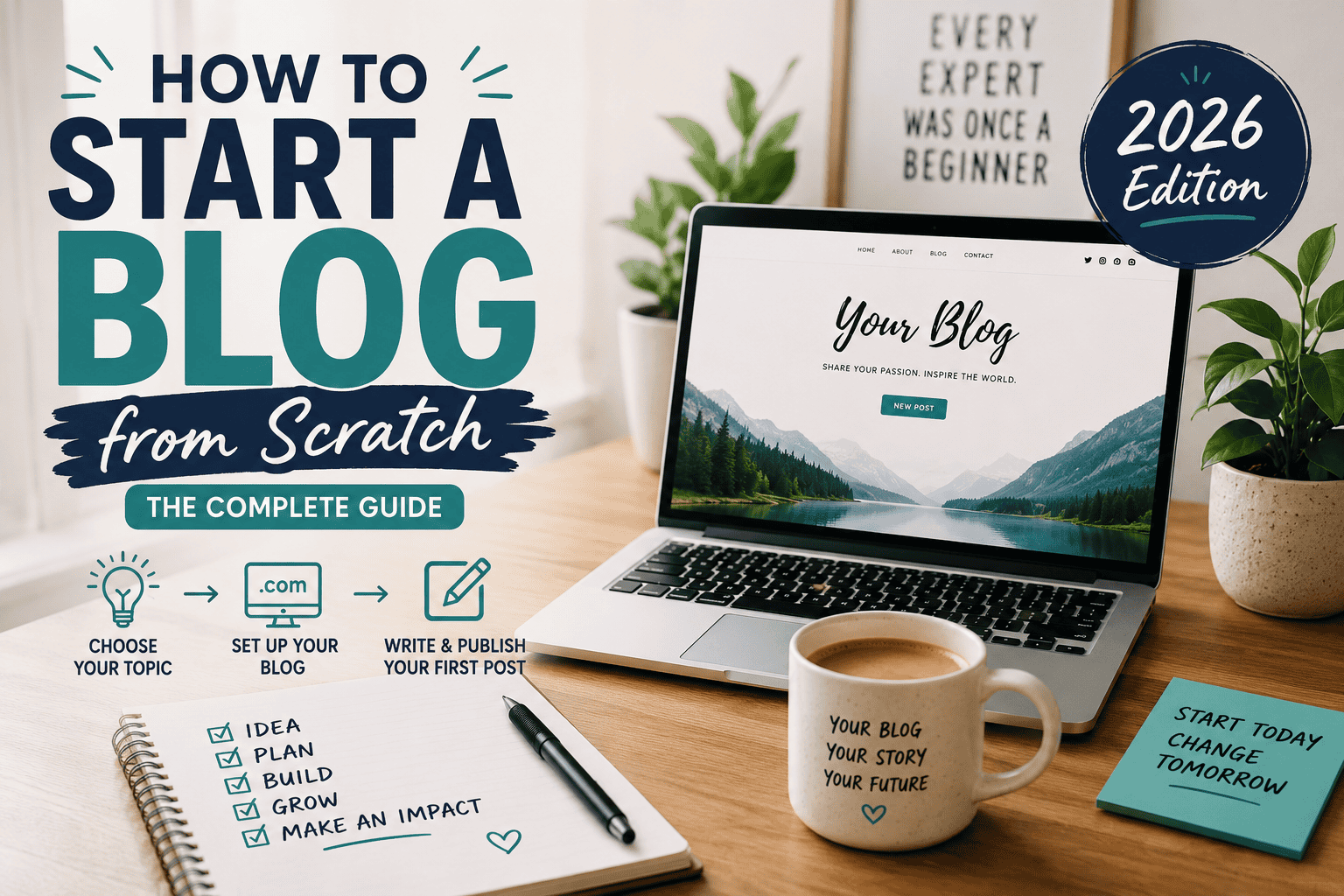
How to Start a Blog from Scratch in 2026 (Complete Ultimate Beginner’s Guide)

I started Daily Net Blog from scratch in 2022 — no audience, no connections, no traffic. Within 18 months it was generating consistent monthly organic visitors and affiliate revenue. Everything in this guide is what I actually did, in the order I did it, including the mistakes that cost me six months.
You’ve been thinking about it for months. Maybe years. You’ve watched others build thriving blogs, grow loyal audiences, and even replace their nine-to-five incomes — and you’ve wondered: Could that be me?
The answer is yes. Absolutely yes.
How to start a blog is one of the most rewarding decisions you can make in 2025. Whether you want to share your passion, build an online business, or simply find a creative outlet — a blog gives you a platform that is 100% yours.
The best part? You don’t need to be a tech wizard. You don’t need thousands of dollars. You just need a willingness to start.
This guide walks you through every single step of starting a blog from scratch — from choosing your topic to publishing your very first post. Before we dive in, if you’re still figuring out what blogging actually is, start with our primer: What Blogging Is and How It Works. Then come right back here.
Table of Contents
- Why Starting a Blog in 2025 Is Still One of the Best Decisions You Can Make
- Step 1 – Get Clear on Your “Why”
- Step 2 – Choose Your Blog Niche
- Step 3 – Pick the Right Blogging Platform
- Step 4 – Get a Domain Name and Hosting
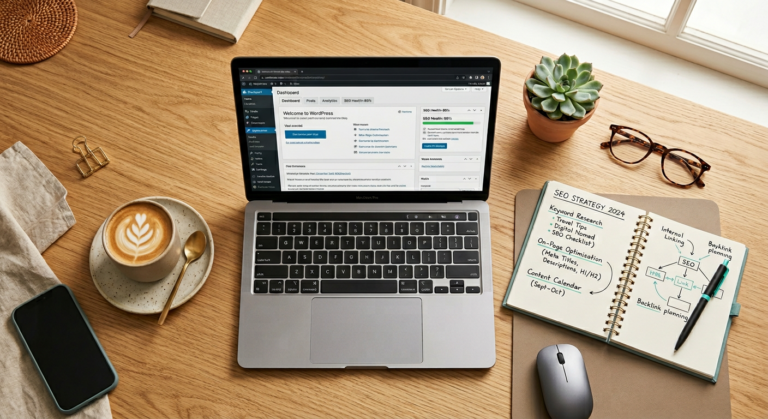
- Step 5 – Install WordPress and Set Up Your Blog
- Step 6 – Design Your Blog Without Being a Designer
- Step 7 – Write and Publish Your First Blog Post
- Step 8 – Drive Traffic to Your Blog
- Step 9 – Start Making Money from Your Blog
- Watch: Video Tutorial by Adam Enfroy
- Conclusion
- Frequently Asked Questions
Why Starting a Blog in 2026 Is Still One of the Best Decisions You Can Make
You might wonder if it’s too late to start a blog. The internet is crowded, algorithms shift, and AI-generated content is everywhere. Why bother?
Because none of that changes the fact that people still search for answers, still read stories, and still trust genuine human voices. A blog built on real experience and useful content will always find an audience.
- You own your content — unlike social media, your blog can never be wiped out by an algorithm update
- Search engines reward helpful, in-depth content — blogs are built for exactly that
- Blogging builds authority and trust in your niche over time
- It creates multiple income streams — from ads to affiliates to your own products
- The barrier to entry is lower than ever — you can be live within a single afternoon
The bloggers thriving today aren’t the ones who started first. They’re the ones who started and didn’t quit. That could be you.
Step 1 – Get Clear on Your “Why”
Before you register a domain or pick a theme, ask yourself one important question: Why do I want to start a blog?
Your “why” is the fuel that will keep you going when the initial excitement fades. Common reasons include:
- Sharing knowledge or expertise in a subject you love
- Building a personal brand or professional online presence
- Creating a side income or eventually a full-time business
- Connecting with a community of like-minded people
- Documenting a personal journey — travel, parenting, health, a career change
There are no wrong answers. What matters is that your reason is strong enough to keep you writing even when no one’s reading yet. Write your “why” down. Put it somewhere visible. It will remind you on the tough days exactly why you started.
Step 2 – Choose Your Blog Niche
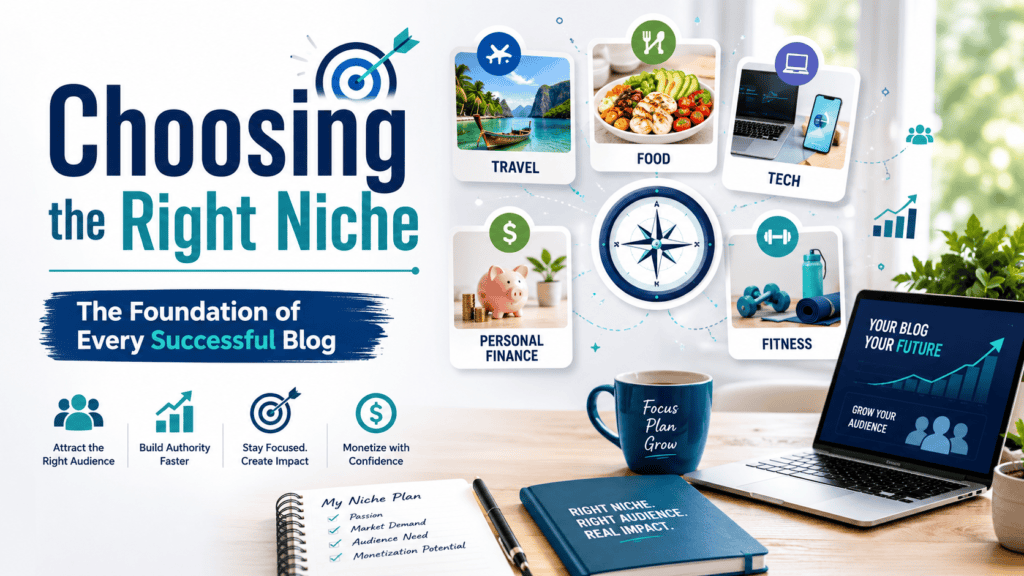
Your niche is the topic your blog focuses on. It’s what makes you recognisable and draws the right audience to your content. Choosing the right niche comes down to three questions:
1. What Do You Know and Love?
Think about your hobbies, skills, career experience, and subjects you talk about endlessly. A blog you’re genuinely passionate about is one you’ll actually keep writing — and readers can feel that passion in every post.
2. Is There an Audience for It?
Search for your potential topic on Google, Pinterest, and YouTube. Are other people asking questions about it? Are there communities and forums around it? If yes, there’s an audience.
3. Can It Make Money?
Topics like personal finance, health and wellness, technology, travel, food, parenting, and digital marketing all have proven monetisation paths via affiliate programs, ads, and digital products.
The sweet spot is where all three overlap: something you love, that others are searching for, and that has income potential.
Pro tip: You don’t need to narrow down to a microscopic niche right away. Start with a broader area and let your audience tell you what resonates as you grow.
Step 3 – Pick the Right Blogging Platform
Your blogging platform is the software that powers your blog. There are several options, but for anyone serious about building a long-term blog, there is one clear winner: WordPress.org.
- It powers over 43% of all websites on the internet
- Completely customisable with thousands of free themes and plugins
- You own your content — 100%, with no platform restrictions
- Free to use (you only pay for hosting and your domain)
- Scales from a hobby blog to a full business without switching platforms
Other platforms like Blogger, Wix, and Squarespace are simpler to set up initially, but they come with limitations on customisation, SEO control, and monetisation that will frustrate you as your blog grows.
👉 Get started with WordPress.org — the world’s most popular free, open-source blogging platform.
Step 4 – Get a Domain Name and Hosting
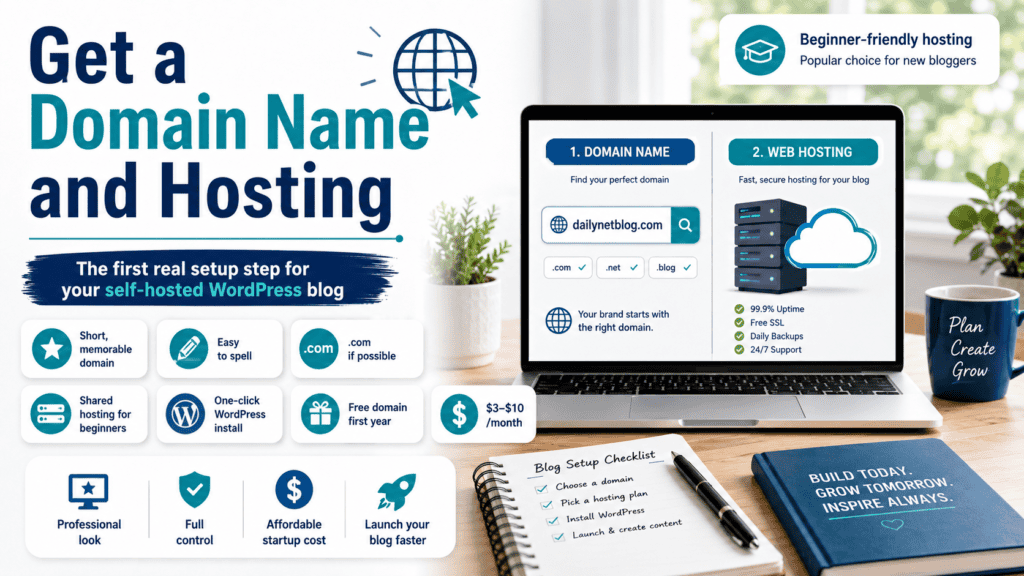
To run a self-hosted WordPress blog — the kind that looks professional and gives you full control — you need two things:
1. A Domain Name
Your domain is your blog’s address on the internet (e.g., dailynetblog.com). Keep it short and memorable, easy to spell and say aloud, relevant to your niche or brand, and go for a .com extension if possible.
2. Web Hosting
Hosting is the server where your blog’s files live. For beginners, shared hosting is the most affordable option. A trusted and popular choice is Bluehost — one of the most widely recommended hosts for new bloggers, offering one-click WordPress installation and a free domain for the first year.
Most starter hosting plans run between $3–$10 per month, making it one of the most affordable business investments you’ll ever make.
Step 5 – Install WordPress and Set Up Your Blog
Once your hosting is sorted, installing WordPress takes about 60 seconds. Most hosting providers — including Bluehost — include a one-click WordPress installer in your control panel.
- Log into your hosting account’s dashboard
- Find the “Install WordPress” button (usually under Website or My Sites)
- Choose your domain, set a username and password
- Click Install — done in under a minute.
After installation, log into your WordPress dashboard at yourdomain.com/wp-admin. This is your home base — where you’ll write posts, manage design, and install plugins.
Essential Plugins to Install Right Away
- Yoast SEO or RankMath — on-page SEO optimisation
- Akismet — blocks spam comments automatically
- UpdraftPlus — automatic backups (never skip this)
- WP Super Cache — speeds up your blog’s load time
- MonsterInsights — connects Google Analytics to your dashboard
Step 6 – Design Your Blog (Without Being a Designer)
In WordPress, design is controlled by themes. For beginners, these are popular and easy-to-customise choices:
- Astra — lightweight, fast, beginner-friendly with hundreds of starter templates
- GeneratePress — ultra-clean and minimal, built for speed
- Kadence — modern and flexible with a great free version
Key design principles: prioritise speed over flashiness, design mobile-first, keep navigation intuitive, and use readable typography (16–18px body text, strong contrast). Set up your core pages before launch: Home, About, Blog, and Contact.
Step 7 – Write and Publish Your First Blog Post
This is the moment everything becomes real. It’s time to write.
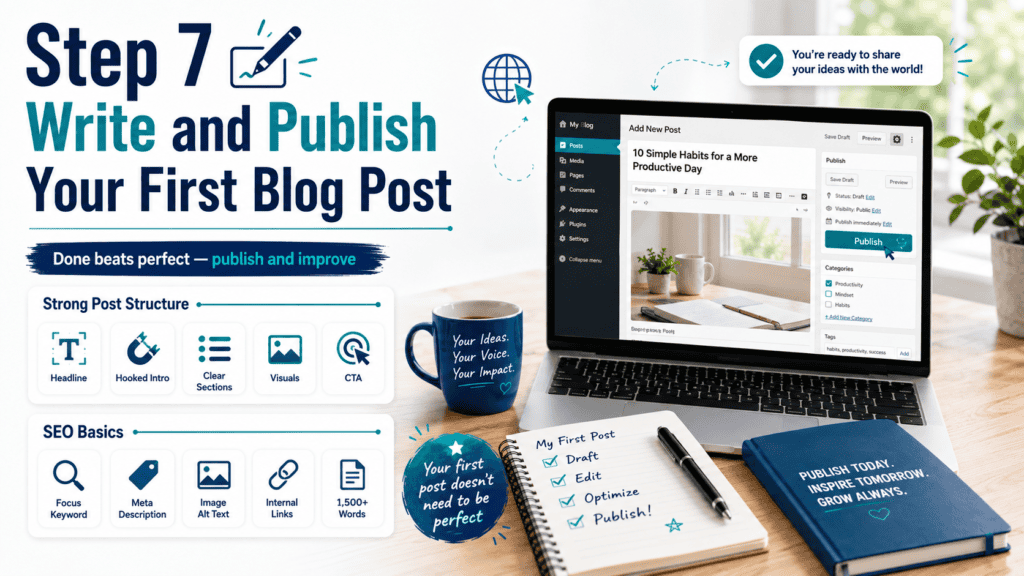
Your first post doesn’t need to be perfect. Chasing perfection is the single biggest reason new bloggers never actually publish anything. Done beats perfect, every single time.
A Reliable Structure for Strong Blog Posts
- Attention-grabbing headline — use numbers, “how to,” or power words
- Introduction — hook the reader with a relatable problem or exciting promise
- Subheadings and sections — break content into logical steps using H2 and H3 headings
- Visuals — add at least one image per main section to break up text
- Conclusion + CTA — summarise takeaways and tell readers what to do next
SEO Basics for Every Post
- Include your focus keyword in the title, first paragraph, and naturally throughout the body
- Write a compelling meta description (under 160 characters)
- Add descriptive alt text to every image
- Link to related posts on your own blog (internal linking)
- Aim for posts over 1,500 words — longer content earns more traffic and backlinks
Need help mapping out your full beginner journey? Our Start Here page is your complete roadmap as a new blogger — bookmark it and come back often.
Step 8 – Drive Traffic to Your Blog
Publishing a great post is only half the battle. You also need people to actually read it.
Search Engine Optimisation (SEO)
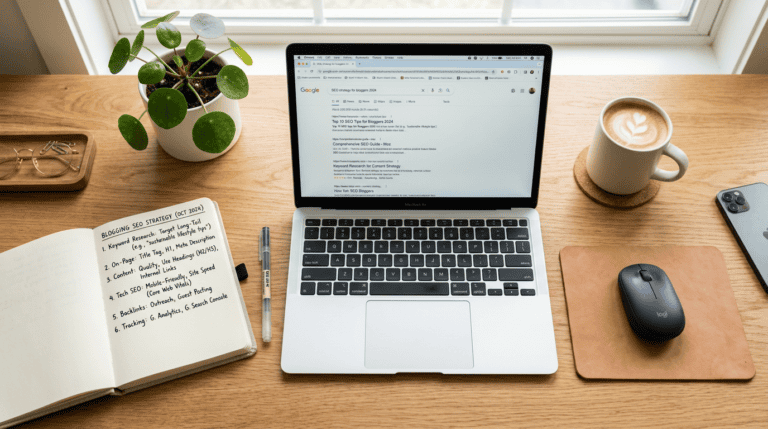
SEO is how your posts appear on Google when people search your topic. It’s the most powerful long-term traffic strategy — it works around the clock, even while you sleep. Start with the Moz Beginner’s Guide to SEO — a thorough, jargon-free introduction to how search engines work.
Also, submit your blog to Google Search Console (free) so Google can find and index your posts faster.
Social Media
Share your posts on Pinterest (excellent for lifestyle, food, DIY, and wellness niches), relevant Facebook groups, Instagram, and X/Twitter. Don’t try to be everywhere at once — pick one or two platforms, master them, then expand.
Email List
Start building an email list from day one. Even a simple free opt-in — “Download my free beginner blogging checklist” — can grow a list of loyal readers who come back every time you publish. Email is the most reliable channel you own.
Internal Linking
Link to your older posts within every new post you publish. It keeps readers on your site longer, reduces bounce rate, and helps search engines understand your content structure. Explore all our beginner guides in the Blogging Basics category.
Step 9 – Start Making Money from Your Blog
Can you actually make money from a blog? Yes — and real people do it every single day. Here are the most beginner-friendly monetisation methods:
- Affiliate Marketing — Recommend products and earn a commission for every sale through your unique link. Amazon Associates and ShareASale are popular starting points.
- Display Advertising — Run ads through Google AdSense (no traffic minimum) or Mediavine once you reach their thresholds. Passive income that grows with your audience.
- Sponsored Posts — Partner with brands to feature their products in relevant content. Rates increase significantly as your audience grows.
- Digital Products — Create and sell ebooks, templates, checklists, or mini-courses. Create once, sell forever.
- Services — Use your blog as a live portfolio to attract freelance writing, consulting, or coaching clients in your niche.
Most successful bloggers combine several of these income streams. Start with one, get comfortable, then layer in others over time.
Watch: How to Start a Blog — Video Tutorial by Adam Enfroy
Prefer to learn by watching? Adam Enfroy — one of the most respected voices in the blogging world and a seven-figure blogger who built his site from zero to over $1 million in revenue — has a comprehensive YouTube tutorial walking you through exactly how to start a blog, step by step.
Watching a real, successful blogger explain their actual process is one of the fastest ways to shortcut your learning curve. Adam’s approach is practical, no-fluff, and genuinely beginner-friendly.
Conclusion
You’ve just walked through every step you need to start a blog from scratch — from finding your niche and choosing WordPress, to writing your first post, driving traffic, and eventually making money.
Here’s the truth no one tells you: the hardest part of blogging isn’t the technical setup. It’s showing up consistently, even when results are slow. Every successful blogger you admire started exactly where you are right now — with zero readers, zero traffic, and a whole lot of uncertainty.
The only difference between them and everyone who never started is this: they published anyway.
So take the leap. Register that domain. Write that first post. The only thing standing between you and a thriving blog is the decision to begin. Ready for the next step? Head to our Start Here page for your full beginner roadmap.
You’ve got this. 🚀
Frequently Asked Questions (FAQs)
How much does it cost to start a blog?
You can start a professional blog for as little as $3–$10 per month. The main costs are web hosting (which typically includes a free domain for the first year) and optionally a premium theme or plugins.
Do I need technical skills to start a blog?
Not at all. Modern blogging platforms like WordPress, combined with beginner-friendly hosts like Bluehost, are designed for non-technical users. If you can use Microsoft Word and check your email, you have all the skills you need.
How long does it take to make money from a blog?
Most bloggers start seeing meaningful income between 6 and 18 months of consistent effort. It depends on your niche, content quality, and how actively you build your SEO and audience. Blogging is a long game — but the returns compound significantly over time.
How often should I publish blog posts?
Quality beats quantity every time. For beginners, 1–2 well-researched posts per week is an excellent cadence. Consistent publishing — even once a week — will outperform sporadic bursts of rushed posts.
Can I start a blog for free?
Yes — platforms like Blogger and WordPress.com offer free plans. However, free blogs have real limitations: no custom domain, restricted customisation, and capped monetisation. For a blog you intend to grow and monetise, a self-hosted WordPress.org blog is the right choice from day one.
What is the best blogging niche for a beginner?
The best niche is one you’re genuinely interested in AND that has a proven audience. Consistently high-earning niches include personal finance, health and wellness, technology, food, parenting, travel, and digital marketing. But success is achievable in almost any niche with the right strategy and consistency.