

Easy Low Competition Keyword Mapping for Beginners
If you’ve ever felt like low competition keyword mapping is some mystical SEO dark art reserved for agencies with six-figure budgets, I’m about to flip that script. I spent years banging my head against impossible keywords before I learned this simple truth: the best SEO strategy isn’t about fighting giants—it’s about finding battles you can actually win. Most beginners waste months targeting keywords they’ll never rank for, watching their content disappear into Google’s abyss while their traffic stays flatter than yesterday’s soda. The solution? Strategic keyword mapping that prioritizes opportunity over vanity metrics.
Table of Contents
- What Is Low Competition Keyword Mapping?
- Why Keyword Mapping Actually Matters (And Why You’re Probably Doing It Wrong)
- How I Find Low Competition Keywords Without Expensive Tools
- My Exact Keyword Mapping Process
- Building Content Clusters for Topical Authority
- The Biggest Mistakes I See Beginners Make
- Frequently Asked Questions
- My Top Recommended Gear
What Is Low Competition Keyword Mapping?
Low competition keyword mapping is the strategic process of identifying search terms with minimal competition and organizing them into a structured content plan that builds topical authority. Instead of randomly publishing content and hoping for the best, you’re creating a roadmap that connects related keywords into cohesive content clusters.
Think of it like planning a road trip. You wouldn’t just drive aimlessly and hope to reach your destination, right? Keyword mapping gives you the route, the stops along the way, and the final endpoint. When I started my blogging journey, I didn’t understand this concept. I wrote whatever felt interesting, which meant I had zero coherent SEO strategy and even less organic traffic to show for my effort.
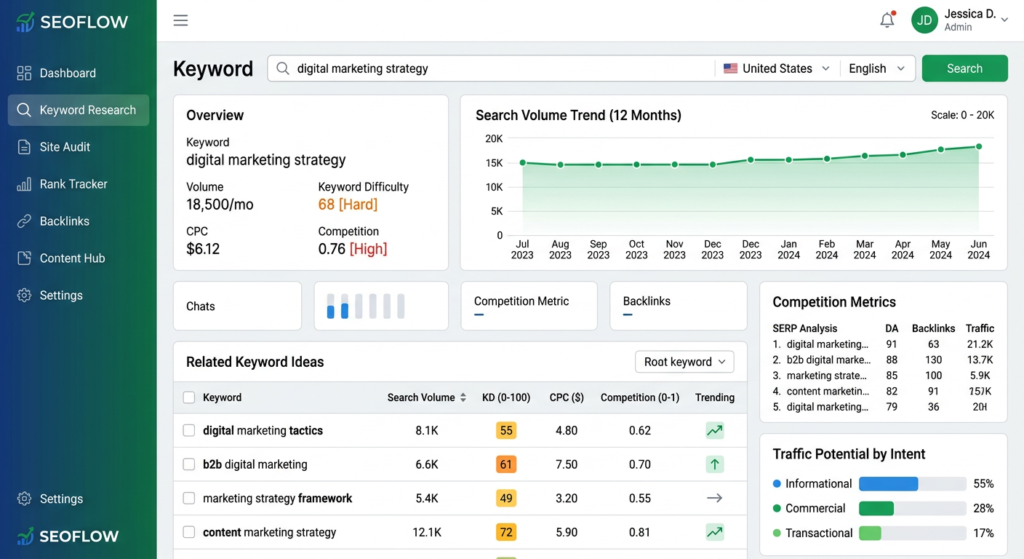
The “low competition” part is critical. We’re talking about keywords with manageable difficulty scores—typically under 30 on most tools—where you’re not competing against Wikipedia, WebMD, or sites with domain authorities higher than your self-esteem on a Monday morning.
Why Keyword Mapping Actually Matters (And Why You’re Probably Doing It Wrong)
Here’s what nobody tells you: publishing great content means absolutely nothing if Google can’t figure out what you’re an authority on. I learned this the hard way after writing 50+ blog posts that collectively generated about 12 visitors per month (and half of those were probably me checking if the posts still existed).
Keyword mapping solves three critical problems:
- Eliminates keyword cannibalization: You won’t accidentally create five posts competing for the same search term
- Builds topical authority: Google’s algorithm loves when you demonstrate deep expertise in specific subjects
- Creates predictable traffic growth: You can actually forecast which content will drive organic traffic instead of playing SEO roulette
According to research from Backlinko’s SEO studies, comprehensive topical coverage significantly impacts rankings. Google’s algorithms increasingly favor sites that demonstrate E-E-A-T (Experience, Expertise, Authoritativeness, and Trustworthiness) across related topics rather than isolated keyword targeting.
Your SEO traffic strategy needs this foundation. Without it, you’re essentially throwing spaghetti at the wall and hoping some of it ranks.
How I Find Low Competition Keywords Without Expensive Tools
Look, I love premium tools as much as the next SEO nerd, but you don’t need a $200/month subscription to find winning keywords. IMO, beginners should master free and affordable methods first.
Here’s my actual process:
The Google Autocomplete Method
Start typing your main topic into Google and watch the magic happen. Those autocomplete suggestions? They’re real searches from real people. I add underscores before and after my main keyword to find different variations:
- “_ keyword mapping” reveals what people search before your term
- “keyword mapping _” shows what they search after
- “keyword mapping for _” uncovers specific use cases
The “People Also Ask” Goldmine
Every Google search shows a “People Also Ask” section. Click one question, and more appear. I’ve found entire content calendars by spending 15 minutes clicking through these expanding questions. Each one represents a potential low competition keyword if you validate it properly.
Reddit and Forum Mining
Go where your audience actually hangs out. Search Reddit, Quora, or niche forums for your topic and look for repeated questions. These queries often have zero competition because traditional SEOs ignore them. I’ve ranked #1 for dozens of keywords I discovered this way.
The Competitor Gap Analysis
Find a competitor who’s slightly ahead of you (not the industry leaders—someone achievable). Use free tools like Ubersuggest or the limited free version of Ahrefs to see what they rank for. Look for keywords where they’re ranking in positions 5-20. Those are your opportunities—keywords with proven search volume where the competition isn’t locked down yet.
My Exact Keyword Mapping Process
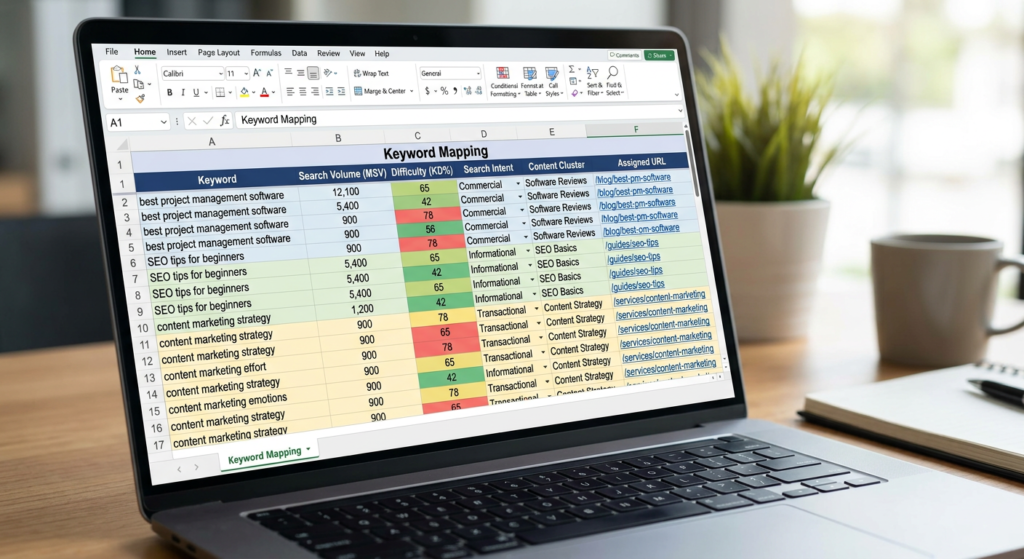
Alright, let’s get tactical. I use a simple Google Sheets template with these columns:
- Target Keyword: The primary phrase I’m targeting
- Search Volume: Monthly searches (don’t obsess over this—even 100 searches can be valuable)
- Keyword Difficulty: Competitive score from your tool of choice
- Search Intent: Informational, Commercial, Transactional, or Navigational
- Content Cluster: Which topic group it belongs to
- Content Type: Blog post, pillar page, comparison, tutorial, etc.
- Priority: High, Medium, or Low based on opportunity
- Target URL: Where this content will live
- Status: Planned, In Progress, Published, Needs Update
My filtering criteria for “low competition” keywords:
- Keyword Difficulty under 30 (some tools use different scales, so adjust accordingly)
- SERP analysis shows at least 2-3 results from sites with comparable or weaker domain authority
- The top results aren’t perfectly optimized (missing keywords in title, thin content, poor user experience)
- Search intent matches what I can realistically create
For each keyword, I manually check the actual search results. Tools give you data, but your eyeballs give you intelligence. Are the top results forum threads? Outdated content from 2015? Thin 300-word posts? That’s your signal that you can create something genuinely better.
When you’re working on your blog SEO strategy as a beginner, this manual verification step is what separates keywords you’ll rank for from keywords that looked good on paper but go nowhere.
Building Content Clusters for Topical Authority
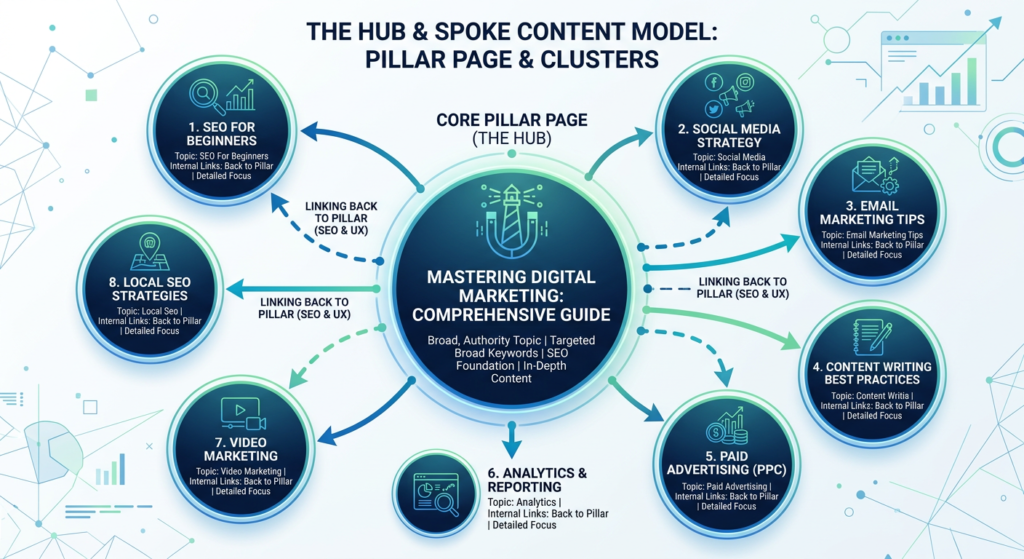
Here’s where keyword mapping transforms from a spreadsheet exercise into actual organic traffic. Content clusters work like this:
Pillar Content: One comprehensive piece targeting your main topic (example: “Complete Guide to Keyword Research”)
Cluster Content: 5-10 supporting pieces targeting specific subtopics (examples: “keyword research tools,” “long-tail keyword strategy,” “competitor keyword analysis”)
Each cluster piece links to the pillar, and the pillar links to all cluster pieces. This internal linking structure tells Google: “Hey, we know our stuff about this entire topic, not just one aspect.”
This video from Ahrefs breaks down keyword clustering with practical examples that complement the mapping strategy I’m outlining—worth your 10 minutes if you’re serious about this.
When I map keywords, I group them into clusters immediately. A typical cluster for me includes:
- 1 pillar post (2,500-4,000 words)
- 3-5 supporting posts (1,200-2,000 words each)
- 2-3 quick-answer posts (600-800 words targeting specific questions)
This structure mirrors how people actually search. Someone might start with a broad query, then dive into specific subtopics as they learn more. Your content cluster anticipates and serves this entire journey.
The Biggest Mistakes I See Beginners Make
Chasing Volume Instead of Opportunity
A keyword with 10,000 monthly searches and a difficulty of 65 is worthless to you as a beginner. A keyword with 200 monthly searches and a difficulty of 15 that you can rank #1 for? That’s gold. I’ll take 20 low-volume rankings over one impossible high-volume keyword every single time.
Ignoring Search Intent
Keyword difficulty is only half the equation. If someone searches “best running shoes,” they want product recommendations, not a 3,000-word history of athletic footwear. Match your content type to what searchers actually want, or Google won’t rank you regardless of competition level.
Creating Orphan Content
Publishing posts without connecting them to your broader content strategy is SEO suicide. Every piece should fit into a cluster, link to related content, and build toward topical authority. Random, disconnected posts might rank individually, but they’ll never build the cumulative authority that drives real traffic growth.
Not Updating Your Map
Your keyword map is a living document, not a set-it-and-forget-it spreadsheet. I review mine monthly, adding new opportunities, updating difficulty scores as I build authority, and marking wins. This helps with monetization planning too—you can see which traffic-generating clusters align with your revenue goals.
Forgetting About LSI and Semantic Keywords
Google doesn’t just look at your exact target keyword anymore. According to Google’s own patent documentation, their algorithms analyze semantic relationships and topical relevance. Include related terms, synonyms, and conceptually connected phrases naturally throughout your content. Your keyword map should account for these variations, not just exact-match keywords.
Frequently Asked Questions
What is low competition keyword mapping?
Low competition keyword mapping is the strategic process of finding keywords with minimal competition and organizing them into a content plan that builds topical authority while targeting phrases you can actually rank for. It combines keyword research with content planning to create a roadmap for SEO success.
How do I find low competition keywords?
Use keyword research tools to filter for keywords with low difficulty scores (under 30), analyze search intent, check SERP competition manually, and look for question-based queries and long-tail variations. Free methods include Google autocomplete, “People Also Ask” sections, Reddit mining, and competitor gap analysis.
What tools are best for keyword mapping?
Google Sheets or Excel work perfectly for organizing keywords. Combine these with keyword research tools like Ahrefs, SEMrush, or free alternatives like AnswerThePublic and Google’s autocomplete feature. The spreadsheet is where you map; the research tools help you discover.
How many keywords should I map for each piece of content?
Target one primary keyword and 2-4 secondary related keywords per post. Don’t try to rank for 20 keywords in one article. Focus creates clarity for both Google and your readers. Build separate content pieces for distinct keyword targets within your cluster.
How long does it take to see results from keyword mapping?
I typically see initial rankings within 4-8 weeks for truly low competition keywords, with significant traffic growth at the 3-6 month mark as topical authority builds. This assumes consistent content quality and proper internal linking. SEO is a marathon, not a sprint—anyone promising faster results is selling something 🙂
Should I target keywords with zero search volume?
Sometimes, yes. Keyword tools often show zero volume for long-tail phrases that still get searched. If the topic makes logical sense within your content cluster and the SERP shows actual competition, it might be worth targeting. I’ve had “zero volume” keywords drive 50+ visitors monthly because the tools simply didn’t capture the data.
My Top Recommended Gear
After testing dozens of tools over the years, these are my honest recommendations for low competition keyword mapping:
- SEO Keyword Research Books – Physical books from established SEO professionals provide foundational knowledge that doesn’t change with algorithm updates. I keep several reference guides on my desk.
- Large Productivity Monitor – Having multiple spreadsheets, SERPs, and research tools open simultaneously makes keyword mapping dramatically more efficient. My dual-monitor setup paid for itself in time savings within months.
- Programmable Mechanical Keyboard – Set up macros for repetitive tasks during keyword research and mapping. Sounds nerdy, but when you’re analyzing hundreds of keywords, efficiency tools matter.
The truth is, your brain and a spreadsheet are the most important tools for keyword mapping. Everything else just makes the process faster or more pleasant.
Low competition keyword mapping isn’t rocket science, but it does require patience and strategic thinking. I’ve seen bloggers with mediocre writing skills outrank excellent writers simply because they understood this process and their competitors didn’t. The keyword opportunities are out there—hiding in plain sight—waiting for someone methodical enough to find them, map them, and execute. That someone might as well be you.
Disclaimer: This post contains affiliate links. As an Amazon Associate, I may earn a commission from qualifying purchases at no additional cost to you.