Powerful Welcome Email Sequence for New Subscribers: The Complete Blueprint
Table of Contents
- What Is a Welcome Email Sequence (And Why Most People Botch It)
- The Anatomy of a High-Converting Welcome Sequence
- Email 1: The Instant Gratification Email
- Email 2: The Story Email
- Email 3: The Value Bomb
- Email 4: The Social Proof Email
- Email 5: The Soft Pitch
- Advanced Tactics the Gurus Won’t Tell You
- Setting Up Your Email Automation
- Frequently Asked Questions
- My Top Recommended Gear
What Is a Welcome Email Sequence (And Why Most People Botch It)
Your welcome email sequence for new subscribers is broken. Sorry to be blunt, but after auditing hundreds of email funnels over the past decade, I can tell you that 90% of creators treat their welcome sequence like an afterthought—and it’s costing them serious money.
A welcome email sequence is a pre-written series of automated emails that new subscribers receive after joining your list, designed to build trust, deliver value, and convert cold leads into engaged customers. Think of it as your automated first impression machine—working 24/7 while you sleep.
Here’s the problem: most people send one weak “thanks for subscribing” email and call it a day. That’s like inviting someone to your house, opening the door, mumbling “hey,” and walking away. Awkward? Absolutely. Effective? Not even close.
The agitation runs deeper. According to Campaign Monitor’s email benchmarks, welcome emails generate 4x more opens and 5x more clicks than standard marketing emails. You’re leaving engagement on the table—engagement that directly translates to subscriber engagement and email conversions.
The solution? A strategic, psychology-driven welcome sequence that I’m about to break down for you. No fluff, no theory—just the exact framework I’ve used to help clients generate six figures from their email lists.
The Anatomy of a High-Converting Welcome Sequence
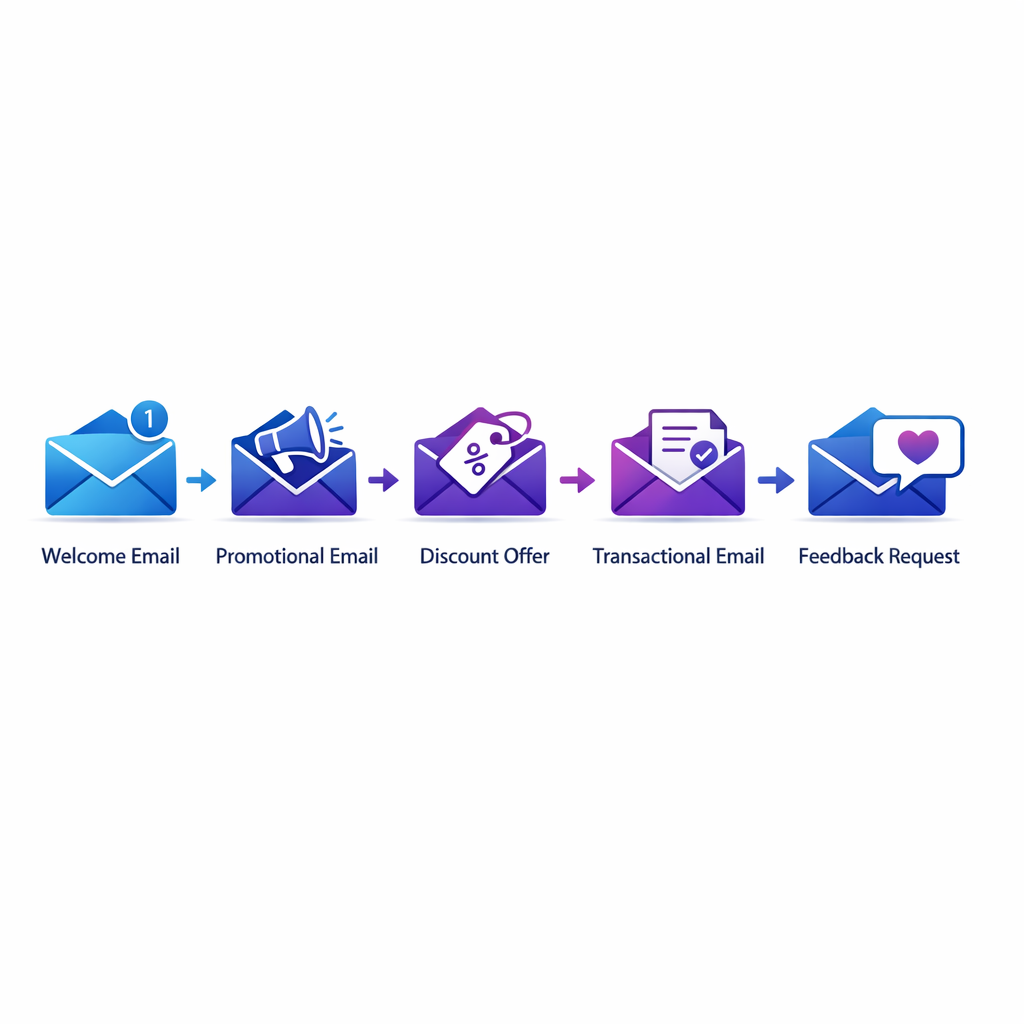
Before we get into individual emails, let me bust a myth that’s been floating around since 2015: there’s no “perfect” number of emails for a welcome sequence. Anyone telling you it MUST be 3 or 7 or 12 emails is oversimplifying.
What matters is the journey. Your email onboarding should accomplish four things:
- Deliver immediate value (fulfill your promise)
- Build genuine connection (you’re a human, not a brand)
- Establish authority (prove you know your stuff)
- Create a natural path to purchase (without being sleazy)
For most businesses, this happens across 5-7 emails over 10-14 days. I’ll show you my go-to 5-email structure that’s generated millions in revenue across different niches. If you’re completely new to this, I recommend starting with my guide on how to do email marketing for beginners to nail the fundamentals first.
Email 1: The Instant Gratification Email
Send timing: Immediately (within 0-5 minutes of signup)
This email has ONE job: deliver what you promised and make subscribers feel smart for joining. That’s it. I see people cramming their entire life story into email one, and it kills conversions.
Here’s my proven structure:
- Subject line: Reference what they signed up for (“Your [Lead Magnet] is ready!”)
- Opening: Acknowledge their decision (1-2 sentences max)
- Delivery: Big, obvious button/link to the resource
- Expectation setting: Tell them when to expect your next email
- P.S.: Add a quick win or bonus tip
Keep this under 200 words. According to research from Litmus, over 40% of emails are opened on mobile devices. Nobody wants to scroll through your manifesto on their iPhone while standing in line for coffee.
Email 2: The Story Email
Send timing: Day 2 (24-48 hours after signup)
This is where most email marketing strategies fall flat. Email two should answer the question every subscriber is secretly asking: “Why should I listen to you?”
Notice I said “story,” not “resume.” Nobody cares that you have 15 certifications or worked at some company. They care about your transformation—specifically, whether you’ve been where they are now.
My framework for story emails:
- The struggle: Share your “before” state (be specific and vulnerable)
- The turning point: What changed everything?
- The result: Where are you now?
- The connection: How does this relate to them?
Here’s an insider tip: end this email with a question. Ask them to reply and share their biggest challenge. This does two things—it boosts your deliverability (engagement signals!) and gives you invaluable market research. IMO, this is the most underrated tactic in email automation.
Email 3: The Value Bomb
Send timing: Day 4-5

By email three, you’ve delivered the goods and shared your story. Now it’s time to prove you’re not just another talking head—you actually know what you’re doing.
This email should teach something genuinely useful. Not a teaser. Not a “here are 3 tips” listicle that says nothing. I’m talking about a complete, actionable micro-lesson that creates a real result.
The psychology here is powerful. When you give away your best stuff for free, two things happen:
- Subscribers think: “If the free content is this good, imagine what the paid stuff is like”
- You trigger the reciprocity principle (Robert Cialdini’s research proves this works)
This email can run longer—800-1000 words is fine if the content delivers. Break it up with subheadings, bullet points, and white space. If you’re building an email list to eventually monetize through partnerships, this value-first approach pairs perfectly with strategies covered in our piece on affiliate marketing income streams.
Email 4: The Social Proof Email
Send timing: Day 7-8
Here’s where most creators chicken out. They’ve been so focused on “providing value” that they never transition to selling. Listen—if you have something that genuinely helps people, NOT selling is a disservice.
But we’re not pitching yet. Email four is about borrowed credibility. You’ll share:
- Testimonials from customers or clients
- Case studies showing real results
- Media mentions or notable collaborations
- Data points that establish authority
If you don’t have testimonials yet (we all start somewhere), use “borrowed proof.” Share results from industry studies, quote respected figures in your niche, or reference your own documented experiments.
The FTC guidelines require you to use honest testimonials and disclose material connections—so keep it ethical, folks.
Expert Commentary: This walkthrough from a seasoned email marketer breaks down the technical setup of welcome sequences in popular platforms—worth watching if you’re implementing this for the first time.
Email 5: The Soft Pitch
Send timing: Day 10-12
Notice I said “soft” pitch. This isn’t a high-pressure sales email with countdown timers and fake scarcity. Those tactics work short-term but destroy long-term list building and trust.
In this email, you’ll:
- Acknowledge the journey they’ve been on with you
- Bridge to your paid offer naturally (“If you’ve enjoyed these emails, you’ll love…”)
- Focus on transformation, not features
- Include ONE clear call-to-action
- Remove pressure (the offer isn’t going anywhere)
Pro tip: make this email feel like a genuine recommendation from a friend. Because if you’ve done the previous four emails right, that’s exactly what you are now—a trusted voice in their inbox 🙂
Advanced Tactics the Gurus Won’t Tell You
Alright, let’s get into the stuff that separates amateurs from professionals. These are techniques I rarely see taught, but they’ve consistently boosted my subscriber welcome emails performance by 30-50%.
1. The “Reply Trigger” in Every Email
End each email with a specific question or invitation to reply. Replies signal to Gmail and Outlook that your emails are wanted. This directly impacts deliverability—which means more of your future emails actually reach the inbox.
2. Segment During the Welcome Sequence
Add a link in email 2 or 3 that says something like “Click here if [specific characteristic].” Anyone who clicks gets tagged and enters a more personalized path. This is email automation at its finest.
3. The “Pattern Interrupt” Subject Line
For email 3 or 4, use a subject line that’s completely different from your usual style. All lowercase. A single word. An inside joke. It breaks the pattern and spikes open rates.
4. Pre-Send Plain Text
For your very first welcome email, consider sending plain text instead of HTML. According to HubSpot’s research, plain text emails often feel more personal and can outperform designed emails for certain audiences.
Setting Up Your Email Automation
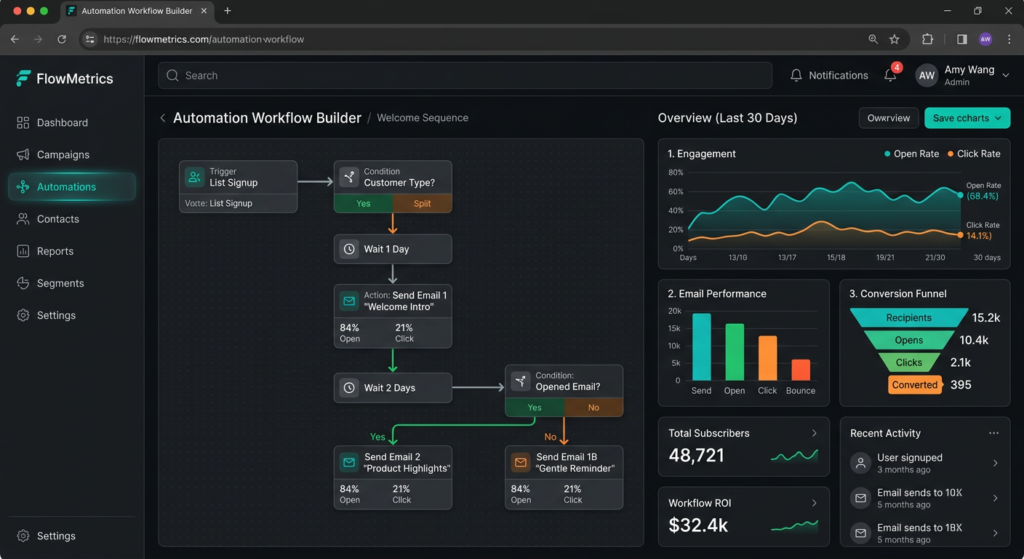
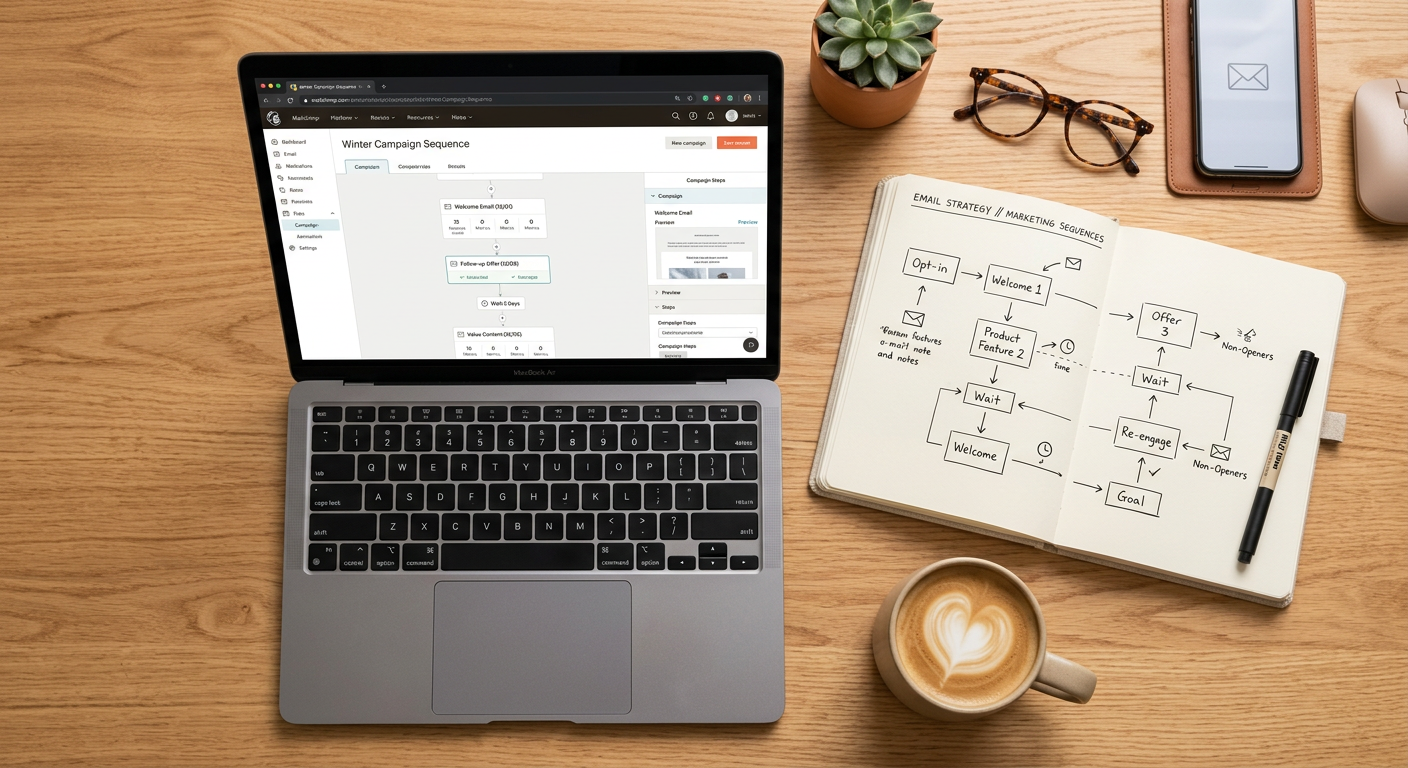
The technical setup is straightforward once you have your emails written. Here’s the quick rundown:
- Choose your platform: ConvertKit, ActiveCampaign, and Mailchimp all handle welcome sequences well
- Create your automation trigger: New subscriber joins list → enters sequence
- Set time delays: Remember my timing recommendations above
- Add exit conditions: Remove them from the sequence if they purchase (don’t keep pitching buyers!)
- Test everything: Subscribe with your own email and experience it as a subscriber would
If you’re just getting started with online marketing in general, check out our start here guide for a complete roadmap.
Frequently Asked Questions
How many emails should be in a welcome sequence?
A solid welcome email sequence typically contains 5-7 emails spread over 10-14 days. This gives you enough touchpoints to build trust and deliver value without overwhelming new subscribers. Start with 5 emails and expand based on your data.
What should the first welcome email contain?
Your first welcome email should deliver the promised lead magnet, introduce yourself briefly, set expectations for future emails, and include one clear call-to-action. Keep it focused and under 300 words. The goal is instant gratification, not your life story.
When should I send welcome emails after signup?
Send your first welcome email immediately after signup while engagement is highest—ideally within 5 minutes. Follow-up emails should be spaced 1-3 days apart, with later emails in the sequence having slightly longer gaps to avoid fatigue.
What’s a good open rate for welcome emails?
Welcome emails typically see open rates between 50-60%, significantly higher than regular marketing emails which average 20-25%. If you’re below 40%, review your subject lines, sender name, and ensure your emails aren’t landing in spam. TBH, anything above 55% is solid.
Should welcome emails be plain text or HTML?
Both can work. Plain text often feels more personal and performs well for the first email. HTML with light branding works better for value-delivery emails with multiple sections. Test both with your audience—data beats opinions every time.
My Top Recommended Gear
Over the years, I’ve tested dozens of tools and resources for email marketing. Here are the three I consistently recommend:
- Email Marketing Books: Browse top-rated email marketing guides on Amazon – Building a strong foundation starts with understanding the psychology behind what works.
- Copywriting Resources: Find essential copywriting books for beginners – Your welcome sequence is only as good as your copy. These resources will sharpen your writing fast.
- Productivity Tools for Creators: Shop productivity planners for content creators – Planning your email content in advance keeps your automation running smoothly.
Disclaimer: This post contains affiliate links. As an Amazon Associate, I may earn a commission from qualifying purchases at no additional cost to you.