What Blogging Is and How It Works: Powerful Guide

Understanding what blogging is and how it works sounds like it should be obvious — until you actually try to explain it. Most people think blogging means writing diary entries online. That misunderstanding has cost countless aspiring creators thousands of hours and dollars chasing the wrong strategy. The real problem? Nobody told them that blogging in 2025 is a full-blown business model, a traffic engine, and a personal brand builder all rolled into one. I’ve spent over a decade building blogs that rank, earn, and grow — and I’m going to break down exactly how this machine works so you can build one yourself.
Table of Contents
- What Is Blogging, Really?
- How Blogging Works: The Engine Under the Hood
- Blogging Basics Every Beginner Must Know
- SEO Blogging: The Skill That Separates Amateurs from Pros
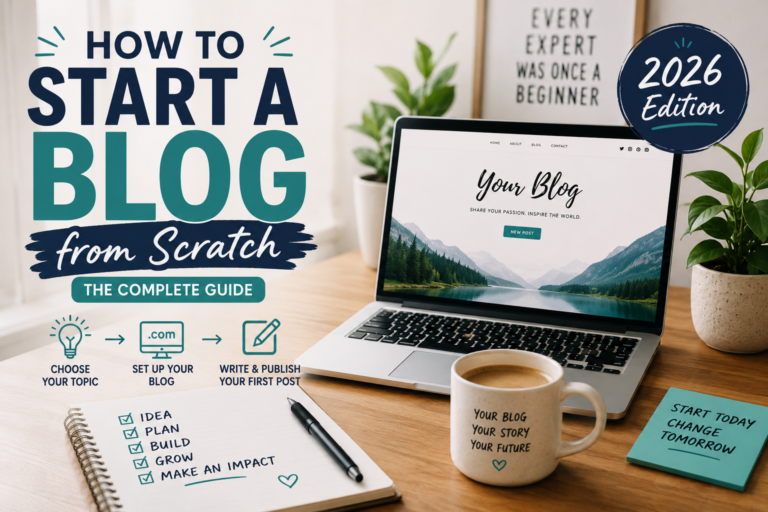
- How to Start a Blog the Right Way
- Blog Monetization: Turning Words into Revenue
- Myth-Busting: What Most Blogging Guides Get Wrong
- Frequently Asked Questions
- My Top Recommended Gear
What Blogging Is and How It Works?
Blogging is the practice of publishing written content on a website, organized in reverse chronological order, to inform, educate, or entertain a specific audience — and when done strategically, it drives organic search traffic that can generate sustainable income.
That’s the definition I wish someone had given me when I started back in 2013. Instead, I got some vague advice about “sharing your passion” and “writing what you love.” Look, passion matters — but passion without strategy is just a hobby with a domain name.
Modern blogging sits at the intersection of content creation, search engine optimization, and digital marketing. When you publish a blog post, you’re not just putting words on a screen. You’re creating a digital asset that, if optimized correctly, can attract visitors from Google 24 hours a day, 7 days a week, for years. The U.S. Small Business Administration recognizes blogging as a legitimate tool for business growth — that’s how mainstream this has become.
If you’re completely new here, I’d recommend checking out my Start Here page for a roadmap of everything I cover on this site.
How Blogging Works: The Engine Under the Hood
Here’s where most blogging for beginners guides fail miserably — they skip the mechanics. Let me walk you through the actual system.
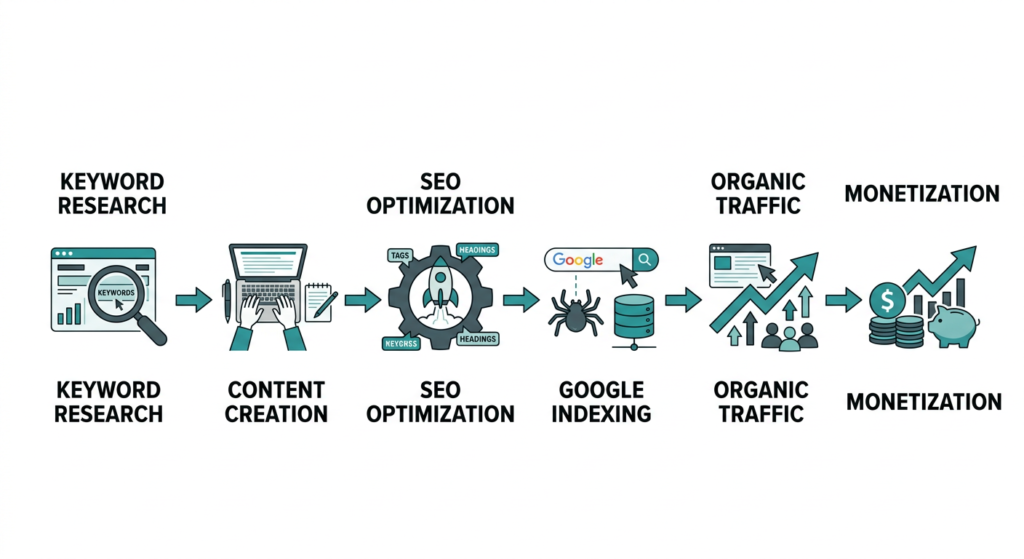
Blogging operates on a simple loop that feeds itself:
- Step 1: Keyword Research. You identify questions and topics your target audience actively searches for on Google.
- Step 2: Content Creation. You write a comprehensive, genuinely helpful post that answers those questions better than anything else on page one.
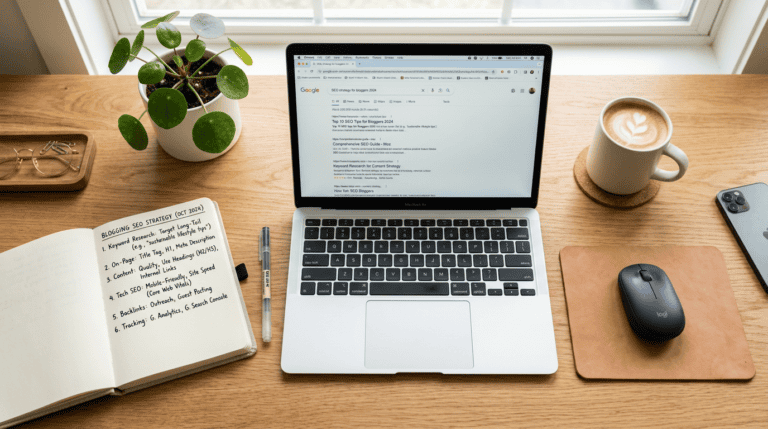
- Step 3: On-Page SEO. You optimize your title tags, meta descriptions, headings, internal links, and image alt text to signal relevance to search engines.
- Step 4: Publishing & Indexing. Google’s crawlers discover your content, evaluate its quality, and place it in the search index.
- Step 5: Ranking & Traffic. If your content is strong enough, it climbs the rankings and starts attracting free organic traffic.
- Step 6: Monetization. That traffic converts into revenue through ads, affiliate links, products, or services.
- Step 7: Reinvest & Scale. You use the data and revenue to create more content, build authority, and grow.
That’s it. That’s how blogging works at its core. Every successful blog on the planet — from niche affiliate sites pulling in $5K/month to media empires like HubSpot — follows some version of this loop. The difference between bloggers who make it and those who quit? Consistency and a refusal to skip Step 1.
Blogging Basics Every Beginner Must Know
Before you write a single word, you need to nail these blogging basics. I’ve watched hundreds of new bloggers burn out because they skipped these fundamentals. Don’t be that person.
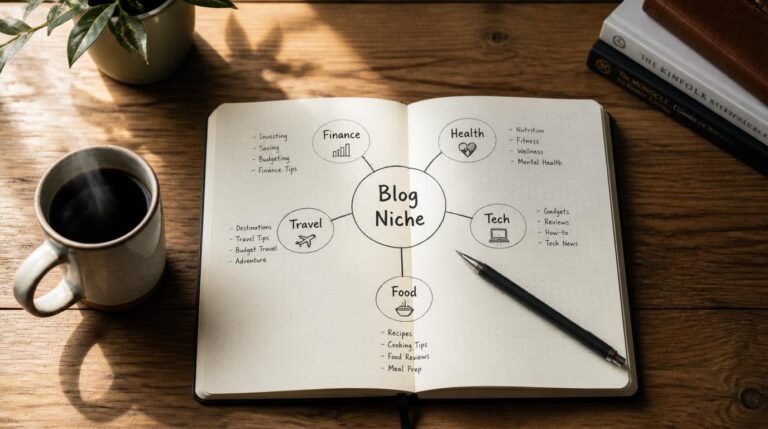
Choose a niche you can sustain. Notice I didn’t say “choose a niche you’re passionate about.” Passion helps, sure. But can you write 100+ posts about this topic without wanting to throw your laptop out a window? That’s the real test. Your niche also needs to have commercial viability — meaning people in that space actually spend money on products and services.
Invest in self-hosted WordPress. Free platforms like Blogger or WordPress.com give you zero control. Self-hosted WordPress (WordPress.org) gives you ownership, flexibility, and access to thousands of plugins that make SEO and monetization possible. According to W3Techs, WordPress powers over 43% of all websites on the internet. There’s a reason for that.
Learn to write for humans first, search engines second. Google’s algorithms have gotten scary good at detecting content that prioritizes keywords over readability. Write like you’re explaining something to a friend. Then optimize. Never the other way around.
Understand that this is a long game. If someone promises you’ll make $10K/month in 90 days from blogging, run. Seriously. The bloggers I know who earn six figures built their sites over 2-3 years of consistent, strategic work. IMO, the best thing about blogging is the compounding effect — but compounding requires patience.
SEO Blogging: The Skill That Separates Amateurs from Pros
SEO blogging isn’t about stuffing keywords into every sentence like it’s 2009. It’s about understanding search intent, creating content that genuinely satisfies that intent, and structuring your site so Google can crawl and rank it efficiently.
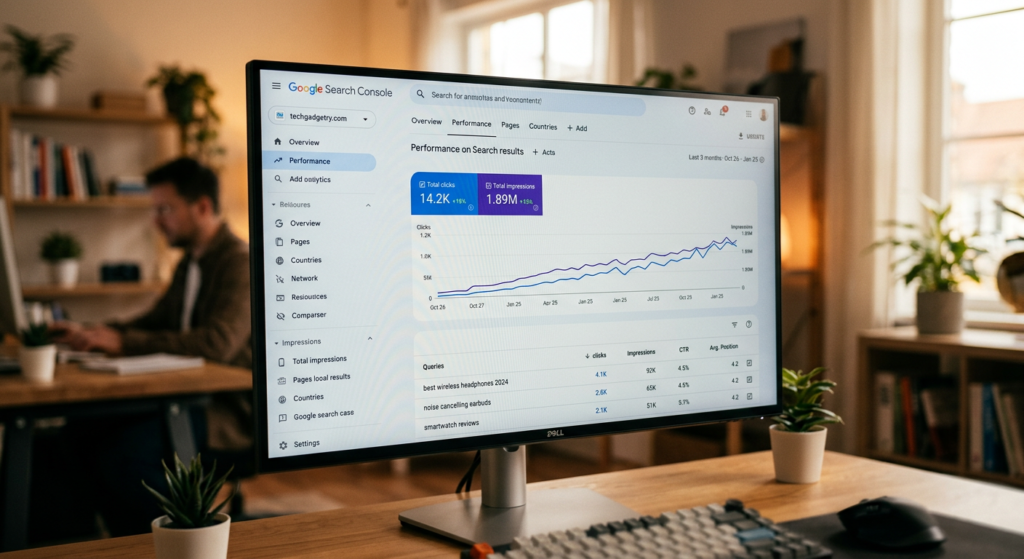
Here are the advanced tactics I use on every single post I publish:
- Search Intent Matching. Before I write, I analyze the top 10 results for my target keyword. Are they listicles? How-to guides? Product reviews? I match the format that Google is already rewarding.
- Topical Authority Building. I don’t write one isolated post on a topic. I build content clusters — groups of interlinked posts that cover a subject comprehensively. Google rewards sites that demonstrate deep expertise. The Google Search Central documentation makes this crystal clear.
- Strategic Internal Linking. Every post I write links to at least 3-5 other relevant posts on my site. This distributes link equity and helps Google understand my site structure. You can see how I structure my content at the Blog Hub.
- E-E-A-T Signals. Experience, Expertise, Authoritativeness, and Trustworthiness. I include personal anecdotes, cite authoritative sources, and make sure my author bio reflects real credentials. Google’s Quality Rater Guidelines emphasize this heavily.
Here’s a question worth asking yourself: if you removed your blog post from the internet, would anyone notice? Would anyone lose a valuable resource? If the answer is no, your content isn’t strong enough to rank. Harsh? Sure. But that’s the standard you need to meet.
How to Start a Blog the Right Way
I’m not going to give you a 47-step checklist because, honestly, starting a blog has never been easier. Here’s the streamlined version I recommend to everyone who asks me:
- Pick your niche. Health, finance, technology, hobbies — whatever you choose, make sure there’s search volume AND buyer intent.
- Get hosting and a domain. A reliable host (I like Cloudways or SiteGround) plus a clean .com domain. Budget around $3-10/month.
- Install WordPress. Most hosts offer one-click installation. Takes about 5 minutes.
- Choose a fast, lightweight theme. GeneratePress, Kadence, or Astra. Don’t overthink this. Speed matters more than aesthetics at the start.
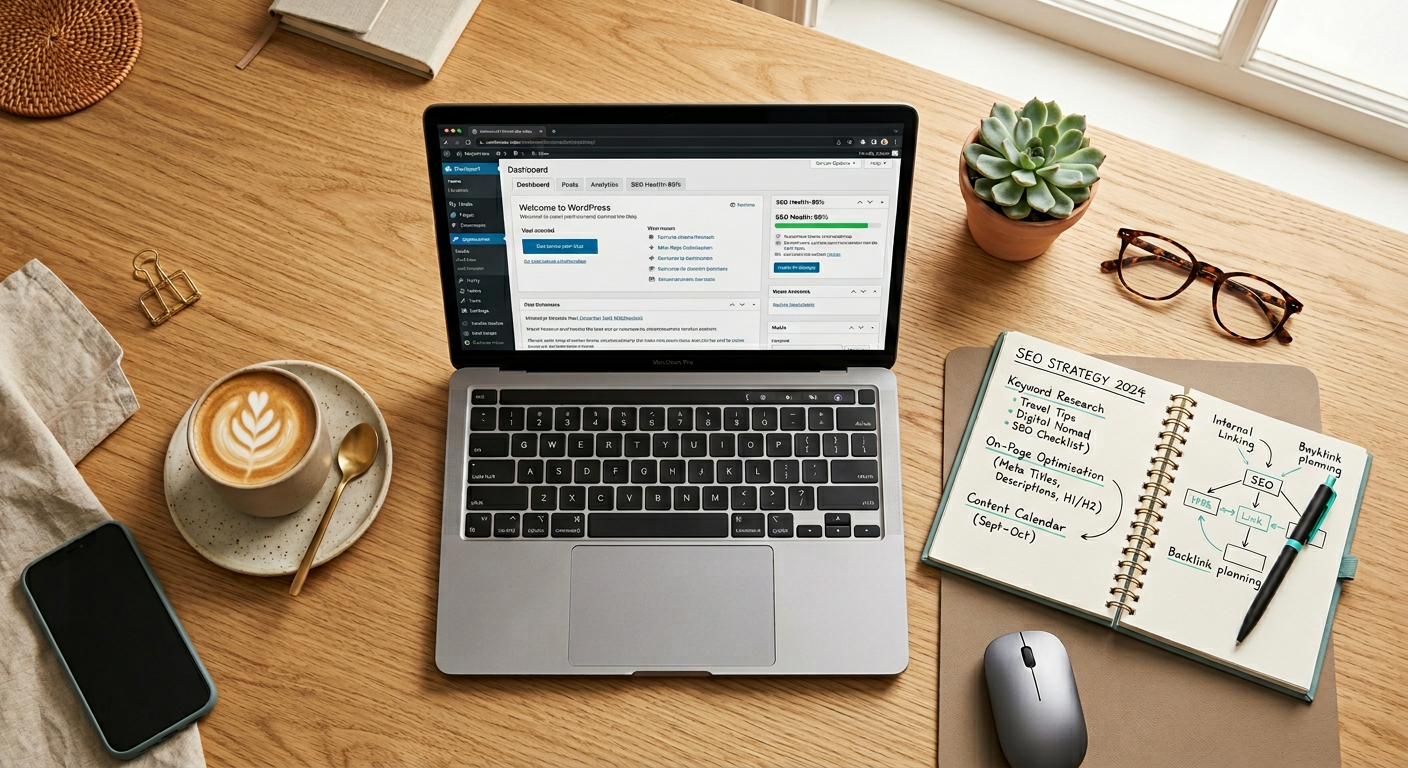
- Install essential plugins. Rank Math or Yoast for SEO, WP Rocket or LiteSpeed Cache for speed, and ShortPixel for image optimization.
- Do keyword research and plan your first 20 posts. Use tools like Ahrefs, SEMrush, or even free options like Ubersuggest.
- Start publishing. Aim for 2-4 posts per week during your first three months. Quality AND quantity matter early on.
I wrote a much more detailed breakdown on this — check out my guide on how to start a blog that makes money if you want the step-by-step with screenshots and tool recommendations.
Expert Commentary: This video provides an excellent visual walkthrough of the blog setup process and covers many of the foundational concepts I’ve discussed here — worth watching if you’re a visual learner who wants to see each step in action.
Blog Monetization: Turning Words into Revenue
Let’s talk money, because that’s why most of you are really here 🙂
Blog monetization breaks down into five primary channels, and the smartest bloggers use multiple streams simultaneously:
- Display Advertising. Networks like Mediavine (requires 50K sessions/month) or Raptive pay you based on ad impressions. A well-trafficked blog can earn $15-40+ per 1,000 pageviews depending on the niche.
- Affiliate Marketing. You recommend products and earn a commission when readers buy through your links. Amazon Associates, ShareASale, and individual brand programs are the big players here.
- Digital Products. eBooks, courses, templates, printables. You create them once and sell them indefinitely. Margins are incredible — often 80-95% profit.
- Sponsored Content. Brands pay you to write about their products or services. Rates vary wildly — I’ve seen $200 for small blogs and $10,000+ for established ones.
- Services and Consulting. Your blog becomes the top of your funnel. You demonstrate expertise through content, and clients come to you. This is probably the fastest path to income for new bloggers with marketable skills.
The biggest mistake I see? New bloggers slapping ads on a site that gets 200 visitors a month and wondering why they earned $0.47 last month. Focus on traffic first. Monetization is a math problem — more targeted traffic equals more revenue. Period.
Myth-Busting: What Most Blogging Guides Get Wrong

Myth: “Blogging is dead.” I hear this every single year since 2015. And every year, my traffic and income grow. Blogging isn’t dead — lazy blogging is dead. The bar has risen. Generic, thin content no longer ranks. But strategic, high-quality blogging? It’s more profitable than ever.
Myth: “You need to post every day.” Quality destroys quantity every time. I’d rather publish three exceptional posts per month than 30 mediocre ones. Google measures value, not volume.
Myth: “Social media can replace a blog.” Social platforms rent you an audience. Your blog gives you OWNED traffic. Algorithm changes on Instagram or TikTok can destroy your reach overnight. Your blog’s organic Google traffic? Far more stable and predictable.
Myth: “AI will replace bloggers.” AI is a tool, not a replacement. I use AI to brainstorm outlines and speed up research. But the personal experience, expert opinions, and authentic voice that make content rank and convert? That still requires a human behind the keyboard. Google’s Helpful Content system specifically targets content created primarily by AI without meaningful human oversight. FWIW, the bloggers embracing AI as an assistant while keeping their expertise front and center are the ones winning right now.
Frequently Asked Questions
Is blogging still profitable in 2025?
Absolutely. Bloggers earn revenue through affiliate marketing, display ads, sponsored content, digital products, and services. The key ingredients are choosing a viable niche, producing genuinely helpful content, and applying smart SEO strategies to drive organic traffic. The bloggers failing are the ones who treat it like a get-rich-quick scheme.
How long does it take to make money from a blog?
Most bloggers start seeing meaningful income between 6 to 18 months after launching. This depends heavily on niche competitiveness, content quality, publishing frequency, and SEO execution. I tell every beginner: give yourself 12 months before you even evaluate whether it’s “working.”
Do I need technical skills to start a blog?
No. Platforms like WordPress, paired with managed hosting providers, make it straightforward to launch a professional blog. If you can use Microsoft Word and navigate the internet, you have enough technical skill to start. Everything else you learn along the way.
What is the difference between a blog and a website?
A blog is a type of website that features regularly updated content presented in reverse chronological order. While a traditional website may have static pages (About, Contact, Services), a blog focuses on publishing fresh articles and guides consistently. Most modern websites include both static pages and a blog section.
What are the best blogging platforms for beginners?
WordPress.org (self-hosted) is the industry standard for serious bloggers due to its flexibility, massive plugin ecosystem, and superior SEO capabilities. Other options like Ghost and Squarespace work for simpler use cases, but they limit your growth potential compared to WordPress.
My Top Recommended Gear
These are tools and products I personally use or recommend to every blogger I mentor. Good equipment won’t write your content for you, but it will remove friction from the process.
- Logitech MX Keys Wireless Keyboard — The best typing experience I’ve found for long writing sessions. My wrists thank me daily. Check price on Amazon
- Samsung 27″ 4K Monitor — Screen real estate matters when you’re juggling a WordPress editor, keyword research tool, and Google Search Console simultaneously. Check price on Amazon
- Blue Yeti USB Microphone — If you plan to add a podcast or YouTube channel to your blogging strategy (and you should), this mic delivers professional audio quality without the professional price tag. Check price on Amazon
Disclaimer: This post contains affiliate links. As an Amazon Associate, I may earn a commission from qualifying purchases at no additional cost to you.