Blog SEO for Beginners: 10 Powerful Wins That Actually Move the Needle
My first 10 posts on Daily Net Blog got a combined 47 organic clicks in 90 days. After applying the SEO fundamentals in this guide, monthly clicks crossed 5,000 within six months — without buying backlinks or using any shortcuts. These are the exact moves that shifted those numbers.
If you’re struggling with blog SEO for beginners, you’re not alone — and honestly, it’s not your fault. The internet is drowning in recycled, surface-level SEO advice that sounds smart but delivers nothing. You follow the “tips,” publish your posts, and then… crickets. No traffic. No rankings. Just the quiet hum of your own frustration. I’ve spent over a decade figuring out what actually works in blog SEO, and I’m going to hand you the 10 wins that made the biggest difference — not theory, not fluff, just stuff I’ve tested with my own money and my own blogs.
📋 Table of Contents
- What Is Blog SEO (And Why Most Beginners Get It Wrong)?
- Win #1: Nail Keyword Research Before You Write a Single Word
- Win #2: Match Search Intent Like Your Rankings Depend on It
- Win #3: Craft Title Tags That Earn the Click
- Win #4: Structure Your Content for Humans AND Crawlers
- Win #5: Build an Internal Linking Web
- Win #6: Make Your Blog Stupidly Fast
- Win #7: Optimize Every Single Image
- Win #8: Earn Backlinks Without Being Sleazy
- Win #9: Update Old Content (The Laziest Win in SEO)
- Win #10: Measure What Matters and Kill What Doesn’t
- Frequently Asked Questions
- My Top Recommended Gear
What Is Blog SEO (And Why Most Beginners Get It Wrong)?
Blog SEO is the practice of optimizing your blog’s content, structure, and technical setup to rank higher in search engine results pages (SERPs). It involves keyword research, on-page optimization, internal linking, site speed, and earning backlinks — all working together to help Google understand, trust, and recommend your content to searchers.
Here’s the myth that kills most beginners: they think blogging and SEO are separate activities. “I’ll write great content FIRST, then do SEO later.” That’s like building a house and then trying to install the foundation. SEO isn’t a coat of paint you slap on after the fact — it’s baked into every decision you make, from the topic you choose to the heading structure you use.
I made this exact mistake with my first blog back in 2013. I wrote 60+ posts before I even looked at Google Search Console. When I finally did? Almost zero organic traffic. Painful. If you’re just getting started, check out my Start Here guide so you don’t repeat my expensive mistakes.
Now let’s get into the 10 wins. These are ordered by impact — do the first three and you’re already ahead of 80% of beginner bloggers.
Win #1: Nail Keyword Research Before You Write a Single Word
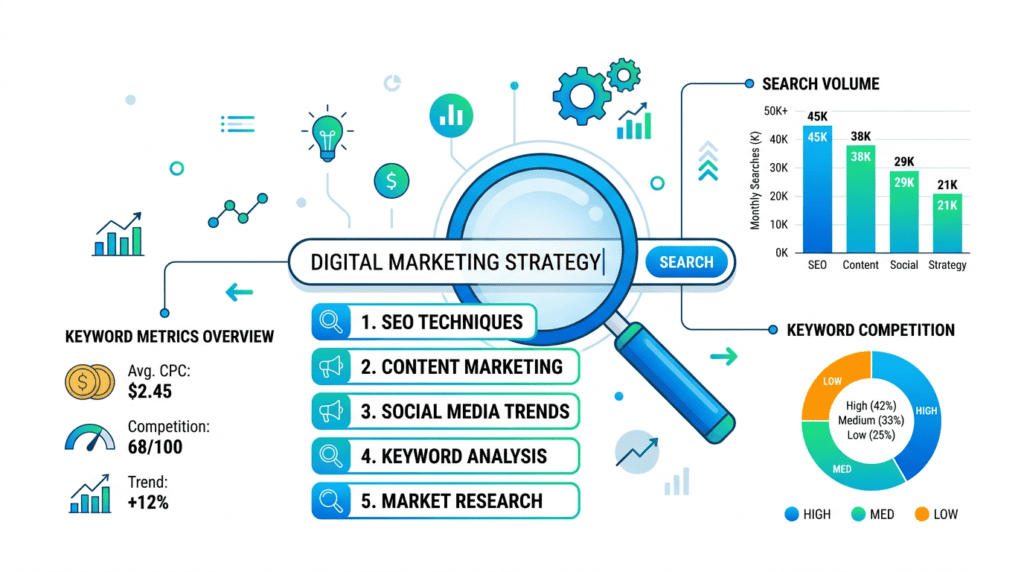
This is non-negotiable. Every successful blog post I’ve ever published started with keyword research — not with inspiration, not with a shower thought. I find what real humans are actively searching for, and then I write something better than what already ranks.
For beginners learning how to blog effectively, here’s my exact process:
- Start with a seed keyword — something broad like “blog SEO” or “blogging tips”
- Use free tools like Google’s “People Also Ask,” autocomplete suggestions, and Google Search Console to find long-tail variations
- Check keyword difficulty — if the first page is dominated by sites like HubSpot, Forbes, and Moz, pick a more specific angle
- Validate with search volume — a keyword nobody searches for is a keyword not worth targeting
The sweet spot for beginners? Keywords with 100–1,000 monthly searches and low-to-medium competition. That’s where you compete and win.
Win #2: Match Search Intent Like Your Rankings Depend on It
Because they literally do. Google’s entire algorithm — from RankBrain to the Helpful Content system — centers on whether your page satisfies the searcher’s actual intent.
There are four types of search intent: informational, navigational, commercial, and transactional. When someone searches “blog SEO for beginners,” they want a comprehensive educational guide — not a sales page, not a 200-word blurb. They want depth, actionable steps, and proof that the author knows their stuff.
Before I write anything, I Google my target keyword and study the top 5 results. What format do they use? How long are they? What subtopics do they cover? Then I make sure my post matches that intent — and exceeds the depth. This single habit transformed my organic traffic.
Win #3: Craft Title Tags That Earn the Click
Your title tag is your first impression in the SERPs, and you never get a second one. I’ve A/B tested hundreds of titles, and the pattern is clear: specificity + curiosity + benefit = clicks.
Compare these two titles:
- ❌ “SEO Tips for Bloggers”
- ✅ “Blog SEO for Beginners: 10 Powerful Wins That Actually Work”
The second title tells you exactly what you’ll get (10 wins), who it’s for (beginners), and implies a strong opinion (actually work — meaning most advice doesn’t). I keep my titles under 60 characters when possible to avoid truncation in search results. IMO, a great title is worth spending 15 minutes on.
Win #4: Structure Your Content for Humans AND Crawlers
Here’s something that took me years to internalize: great content with bad structure performs worse than good content with great structure. Google’s crawlers need clear hierarchical signals. Readers need scannable formatting. Both get what they need from proper heading usage.
My formula for every blog post:
- One H1 tag (your title — only one per page)
- H2 tags for main sections
- H3 tags for subsections
- Short paragraphs (3–4 sentences max)
- Bullet points and numbered lists for scanability
- Bold text on key phrases (not keyword stuffing — strategic emphasis)
According to research from the Nielsen Norman Group, 79% of web users scan rather than read. Structure your content accordingly, or lose them in seconds.
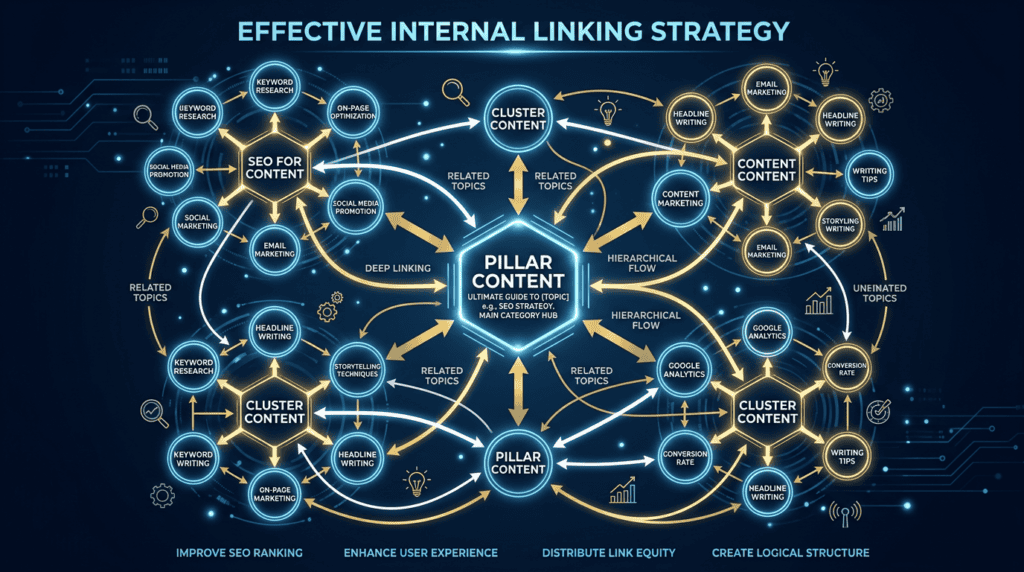
Win #5: Build an Internal Linking Web
Internal linking is the most underrated SEO tactic I know. Every time I publish a new post, I go back to 3–5 older posts and link to the new one. Then I link from the new post to relevant existing content. This creates a web that distributes page authority and helps Google discover and understand the relationships between your pages.
If you’re serious about learning how to start a blog that generates revenue, I break down the full strategy in my guide on how to start a blog that makes money. Internal linking played a massive role in the growth I describe there.
Pro tip: Use descriptive anchor text. “Click here” tells Google nothing. “Blog SEO for beginners guide” tells Google exactly what that linked page is about.
Win #6: Make Your Blog Stupidly Fast
Google has confirmed that Core Web Vitals are a ranking factor. If your blog takes 5+ seconds to load, you’re bleeding traffic before anyone reads a word. I’ve seen blogs double their organic traffic just by fixing load times.
My speed checklist:
- Use a quality hosting provider (I share my favorites on my recommended tools page)
- Install a caching plugin (WP Super Cache or LiteSpeed Cache)
- Compress images before uploading (ShortPixel or TinyPNG)
- Minimize JavaScript and CSS bloat
- Use a CDN (Cloudflare’s free tier works great)
Test your site at Google’s PageSpeed Insights. If your mobile score is below 70, you’ve got work to do.
🏆 Pro Recommendation: SEO Affiliate Domination
If you want a proven, step-by-step system for turning blog SEO into actual affiliate income, I recommend checking out SEO Affiliate Domination. It’s the same methodology I used to scale my first niche site past $3K/month in organic affiliate revenue. The training covers keyword research, content strategy, and link building specifically for affiliate bloggers.
Win #7: Optimize Every Single Image
Most beginner bloggers upload full-resolution images straight from their phone or stock photo site. Those 4MB images are silently destroying your page speed and your rankings.
Here’s my image optimization workflow:
- Resize to the maximum display width (usually 800–1200px)
- Compress using WebP format (30-50% smaller than JPEG)
- Write descriptive alt text with natural keyword placement
- Use lazy loading so images below the fold don’t slow initial render
Alt text matters more than people realize. It’s an accessibility requirement AND it helps you rank in Google Image search — a traffic source most bloggers completely ignore. 🙂
Expert Commentary: This Ahrefs walkthrough is hands-down one of the best beginner-friendly SEO overviews on YouTube — it covers everything from keyword research to link building with real examples and zero filler, which is exactly why I recommend it alongside this guide.
Win #8: Earn Backlinks Without Being Sleazy
Backlinks remain one of Google’s top 3 ranking factors. But here’s the myth I want to bust: you don’t need to cold-email 500 strangers or buy links from shady PBNs. The best backlink strategy for beginners? Create content so useful that people naturally reference it.
Tactics that actually work for me:
- Original research or data — even a simple survey or case study gets linked
- Comprehensive resource posts — like this one 🙂
- Guest posting on relevant blogs — quality over quantity, always
- HARO/Connectively — respond to journalist queries and earn .edu and news site links

Win #9: Update Old Content (The Laziest Win in SEO)
I call this the “laziest” win because the ROI is absurd. Instead of writing something brand new, you take an existing post that’s ranking on page 2 or 3, refresh the content, update the stats, improve the structure, and republish it with a fresh date.
I’ve moved posts from position 18 to position 4 in under two weeks using this technique. Google loves fresh content, and updating old posts signals that your blog is actively maintained.
Check your Google Search Console for posts ranking in positions 8–20. Those are your low-hanging fruit. Add 200–500 words of new value, update the title if needed, and hit publish.
Win #10: Measure What Matters and Kill What Doesn’t
If you’re not measuring, you’re guessing. And guessing is not a strategy. The two free tools every blogger needs are Google Search Console (for search performance data) and Google Analytics 4 (for user behavior data).
The metrics I actually care about:
- Organic clicks and impressions (Search Console) — are people finding my content?
- Average position per keyword — am I trending up or down?
- Engagement rate (GA4) — are visitors actually reading, or bouncing immediately?
- Pages per session — is my internal linking doing its job?
I review these numbers every Monday morning with my coffee. It takes 15 minutes and it keeps me focused on what’s actually moving the needle instead of chasing every shiny SEO tactic that pops up on Twitter.
Frequently Asked Questions
How long does blog SEO take to show results?
Most blog posts take 3 to 6 months to gain meaningful organic traction. Newer domains with low authority can take 6 to 12 months. Consistency, quality backlinks, and strong on-page SEO accelerate this timeline significantly.
Do I need expensive tools for blog SEO?
No. Free tools like Google Search Console, Google Analytics, and Ubersuggest’s free tier can handle most beginner needs. Paid tools like Ahrefs or Semrush become worthwhile once your blog generates revenue and you need deeper competitive analysis.
How many blog posts should I publish per week for good SEO?
Quality beats quantity every time. Publishing 1 to 2 thoroughly researched, well-optimized posts per week outperforms publishing 5 thin articles. Google rewards depth, expertise, and user satisfaction over sheer volume.
Is blogging still worth it for SEO in 2025?
Absolutely. Blogging remains one of the most effective ways to generate long-term organic traffic. HubSpot reports that companies with active blogs generate 67% more leads. The key is creating genuinely helpful, well-structured content that satisfies search intent.
My Top Recommended Gear
These are the tools and products I personally use or recommend to every blogger serious about SEO. I’ve tested dozens of options — these are the ones that earned a permanent spot in my workflow.
- Logitech MX Keys Keyboard — When you’re writing 2,000+ word blog posts regularly, a quality keyboard isn’t a luxury, it’s a necessity. This one has perfect key travel and pairs across devices seamlessly. Check price on Amazon →
- Ahrefs Webmaster Tools (Book/Guide) — While the tool itself has a free tier, I also recommend picking up a solid SEO reference book to build foundational knowledge. Browse top-rated SEO books on Amazon →
- Blue Yeti USB Microphone — If you’re planning to add video or podcast content to your blog (and you should), this microphone delivers studio-quality audio without the studio price. Check price on Amazon →
Disclaimer: This post contains affiliate links. As an Amazon Associate and ClickBank Partner, I may earn a commission from qualifying purchases at no additional cost to you.