How to Do Email Marketing for Beginners: Proven Steps That Actually Work
If you’ve been wondering how to do email marketing for beginners, you’re sitting on one of the most underrated skills in online business. Here’s the problem: most beginners pour all their energy into social media, watch algorithm changes nuke their reach overnight, and then wonder why they can’t generate consistent revenue. It stings. I watched my Instagram reach drop 60% in a single month back in 2021, and that was my wake-up call. The solution? I built an email list. Within six months, that list became my most reliable income channel — and I haven’t looked back since.
This guide walks you through every step I wish someone had handed me on day one. No fluff, no recycled advice — just the marketing strategy that actually moves the needle when you’re starting from zero.
Table of Contents
- What Is Email Marketing (And Why Should You Care)?
- Step 1: Choose the Right Email Marketing Platform
- Step 2: Build Your Email List the Smart Way
- Step 3: Create a Lead Magnet That Actually Converts
- Step 4: Write Emails People Want to Open
- Step 5: Automate Your Email Sequences
- Step 6: Track, Test, and Optimize Everything
- Email Marketing Myths That Need to Die
- FAQ: Email Marketing for Beginners
- My Top Recommended Gear
What Is Email Marketing (And Why Should You Care)?
Email marketing is the practice of sending targeted messages to a list of subscribers who have opted in to hear from you. It allows you to build direct relationships with your audience, promote products, and drive traffic — all without depending on any social media algorithm. It consistently delivers the highest ROI of any digital marketing channel.
Let me put some numbers on this. The Litmus 2023 State of Email report found that email generates an average return of $36 for every $1 spent. That’s not a typo. Compare that to the $2-$5 return you’ll typically see from paid social ads, and the choice becomes pretty obvious.
If you’re just getting started with your online business, email marketing isn’t optional — it’s foundational. You own your list. Nobody can throttle your reach or shut off your access. That’s real leverage.
Step 1: Choose the Right Email Marketing Platform
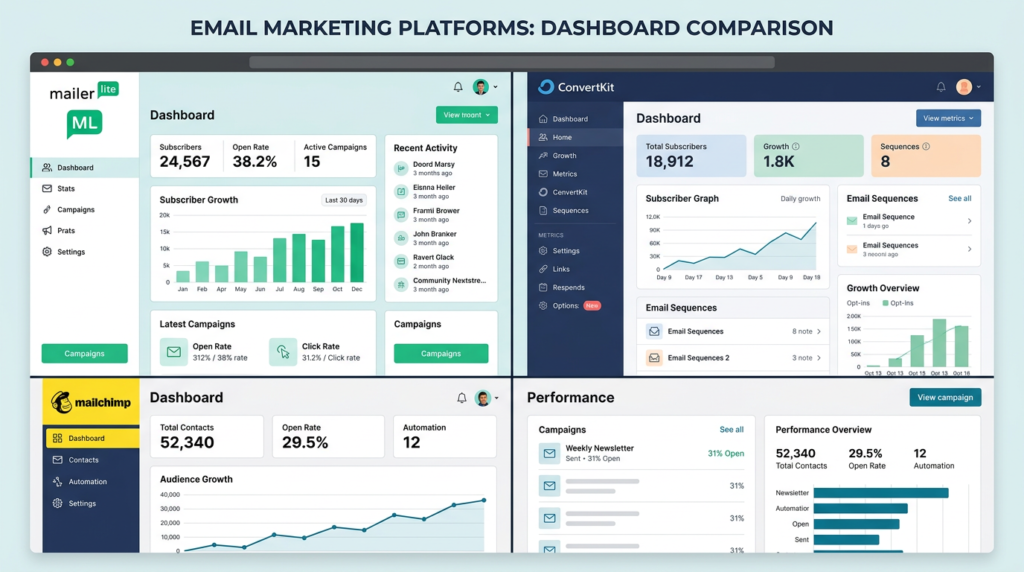
Your platform choice matters more than most beginners realize. I’ve tested over a dozen tools since 2014, and here’s what I recommend based on where you are right now:
- MailerLite — Best free plan for beginners (1,000 subscribers, automation included). This is where I tell most people to start.
- ConvertKit (now Kit) — Best for creators and bloggers who plan to sell digital products. The visual automation builder is chef’s kiss.
- Mailchimp — Decent free tier but has gotten more restrictive over the years. Still solid for basic needs.
Insider tip: Don’t pick a platform based on price alone. Pick one based on the automation features you’ll need in six months. Migrating email lists between platforms is a headache I wouldn’t wish on anyone. Trust me on this one 🙂
If you want my full breakdown of the tools I personally use and recommend, check out my recommended tools page.
Step 2: Build Your Email List the Smart Way
Here’s where most email marketing for beginners guides give you garbage advice like “just add a signup form to your sidebar.” Sure, that works — if you want three subscribers by Christmas.
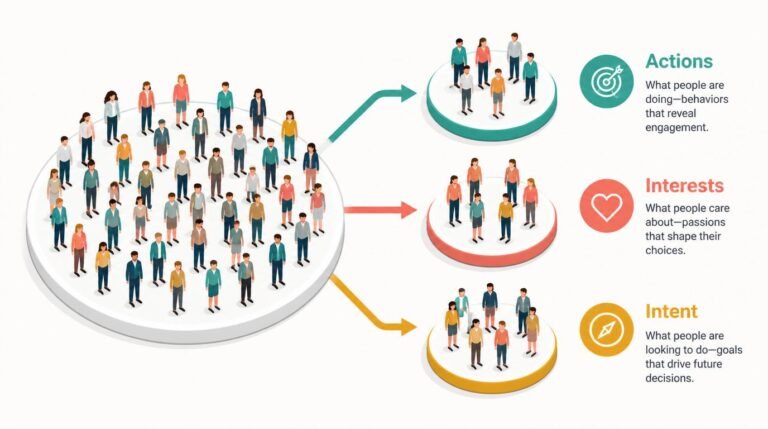
Email list growth requires strategy. Here’s what actually works:
- Dedicated landing pages — Single-purpose pages with one goal: get the opt-in. No navigation menus, no distractions.
- Content upgrades — Offer a bonus resource directly related to a specific blog post. These convert 3-5x higher than generic forms.
- Exit-intent popups — Catch people right before they leave. Annoying? Maybe. Effective? Absolutely.
- Social media CTAs — Direct your followers to your lead magnet, not just your homepage.
The FTC’s CAN-SPAM Act requires that every marketing email includes an unsubscribe option, your physical address, and honest subject lines. Follow these rules from day one — the penalties for violations can reach over $50,000 per email. Not worth the risk.
If you already have a blog generating traffic, you’re ahead of the game. If not, I wrote a complete guide on how to start a blog that makes money — that’ll give you the traffic engine you need to fuel your list.
Step 3: Create a Lead Magnet That Actually Converts
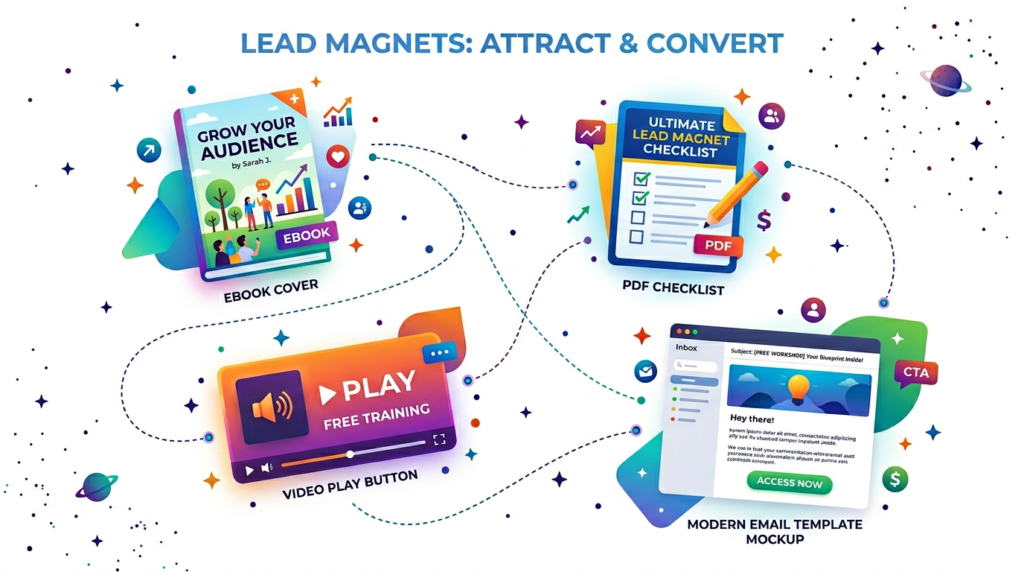
A lead magnet is the “bribe” you offer in exchange for someone’s email address. And here’s the myth I need to bust right now: your lead magnet does NOT need to be a 47-page ebook.
The best-performing lead magnets I’ve ever created were simple one-page checklists. Why? Because people want quick wins, not homework assignments. IMO, the biggest mistake beginners make is over-engineering their freebie.
High-converting lead magnet formats:
- Checklists — “The 10-Point Blog Post Checklist” (took me 20 minutes to create, generated 2,400+ subscribers)
- Templates — Email templates, social media calendars, budget spreadsheets
- Mini-courses — A 3-day email course that delivers one lesson per day via your autoresponder
- Swipe files — Collections of proven headlines, subject lines, or ad copy
The key principle: solve one specific problem for one specific person. Vague lead magnets attract vague subscribers who never buy anything.
Step 4: Write Emails People Want to Open
You’ve got subscribers. Now what? You need to write emails that don’t get ignored. Here’s my framework after sending thousands of emails over the past decade:
Subject lines are everything. According to HubSpot’s email marketing research, 47% of recipients decide to open an email based solely on the subject line. I spend more time on my subject lines than on the email body itself.
My subject line rules:
- Keep it under 50 characters
- Use curiosity gaps (“I almost quit before discovering this…”)
- Avoid ALL CAPS and excessive exclamation marks (spam filters hate them, and so do humans)
- Personalize when possible (most platforms let you insert first names)
For the email body: Write like you’re emailing one friend, not broadcasting to a crowd. Use short paragraphs. One idea per email. And always — always — include a clear call to action. Whether that’s clicking a link, replying to your email, or buying a product, tell people exactly what you want them to do next.
If you’re monetizing through affiliate marketing, your emails become your highest-converting sales channel. I’ve seen single emails generate more affiliate revenue than an entire month of blog traffic.
🔥 Pro Recommendation:
If you want to master email copywriting and list monetization, I highly recommend checking out Inbox Blueprint — a step-by-step email marketing training built specifically for beginners who want to turn their list into a revenue machine.
Step 5: Automate Your Email Sequences
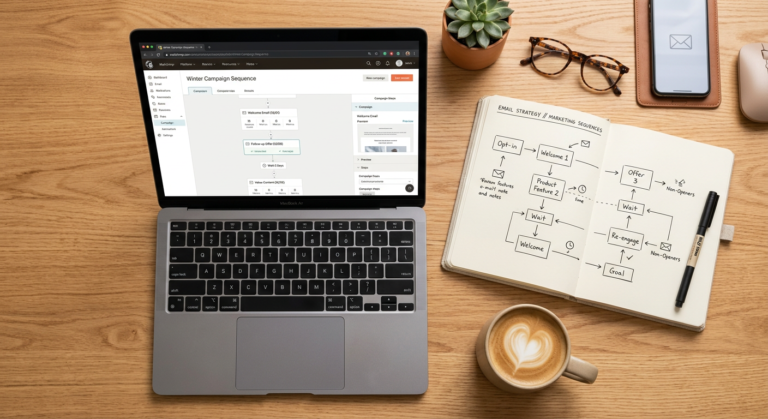
This is where how to do email marketing shifts from “side hustle task” to “automated revenue stream.” Automation means you write emails once, and they deliver themselves to every new subscriber on autopilot.
Here’s the welcome sequence I use (and recommend to every beginner):
- Email 1 (Immediate): Deliver the lead magnet. Introduce yourself. Set expectations for what’s coming next.
- Email 2 (Day 2): Share your personal story. Why should they listen to you? Build connection.
- Email 3 (Day 4): Provide massive value — your best tip, resource, or insight related to their problem.
- Email 4 (Day 6): Soft pitch. Recommend a product or service that genuinely helps them (affiliate or your own).
- Email 5 (Day 8): Ask a question. Encourage replies. This boosts your sender reputation with email providers.
After the welcome sequence, move subscribers into your regular broadcast schedule. One to two emails per week keeps engagement high without burning out your list. https://
Expert Commentary: This tutorial from Simplilearn breaks down the core email marketing workflow visually — I recommend watching it if you’re a visual learner who wants to see platform walkthroughs alongside strategy.
Step 6: Track, Test, and Optimize Everything
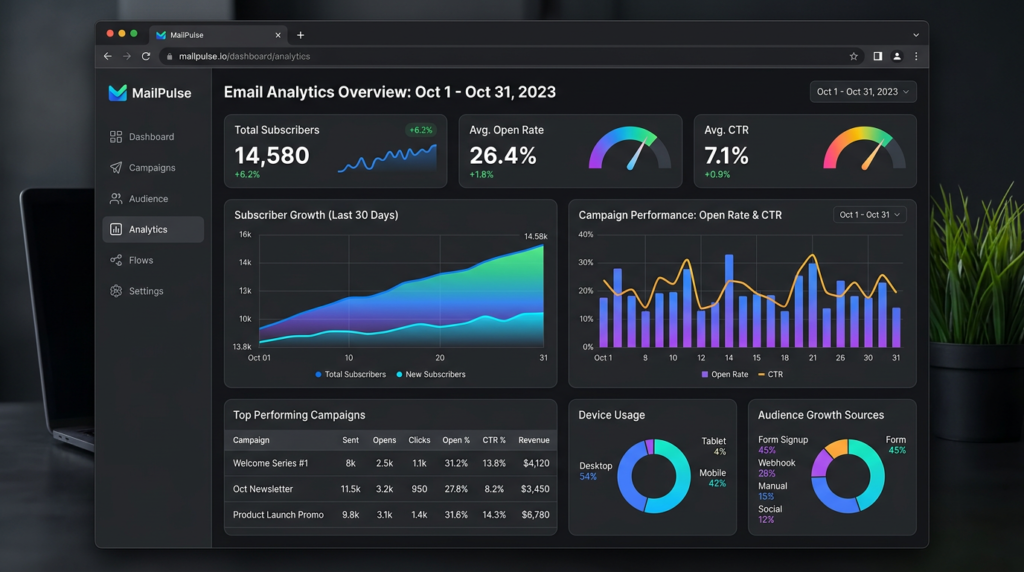
You can’t improve what you don’t measure. Every email platform gives you these critical metrics — here’s what to actually pay attention to:
- Open Rate: Aim for 20%+ initially. Below 15%? Your subject lines need work or your list quality is poor.
- Click-Through Rate (CTR): 2-5% is solid for most niches. This tells you if your content and CTAs resonate.
- Unsubscribe Rate: Under 0.5% per email is healthy. If it spikes, you’re either emailing too frequently or your content missed the mark.
- Reply Rate: The secret metric nobody talks about. Replies signal to Gmail and Outlook that you’re a real person, not a spammer. This directly improves your deliverability.
A/B testing is your best friend. Test one variable at a time: subject line A vs. B, send time morning vs. evening, short email vs. long email. Small, consistent improvements compound into massive results over months. The Campaign Monitor benchmarks report provides industry-specific averages so you know exactly where you stand.
TBH, most beginners skip this step entirely. Don’t be most beginners.
Want to drive even more traffic to your opt-in pages? I’ve had fantastic results using Pinterest as a free traffic source. Here’s my guide on how to start Pinterest for beginners — it pairs perfectly with an email growth strategy.
Email Marketing Myths That Need to Die
Myth #1: “Email is dead.”
There are over 4.5 billion email users globally. Social platforms rise and fall. Email has been the backbone of online communication since the 1990s and isn’t going anywhere. Anyone who tells you email is dead is trying to sell you a social media course.
Myth #2: “You need a huge list to make money.”
I generated my first $1,000 month from a list of 437 people. A small, engaged list beats a massive, disengaged one every single time. Focus on quality subscribers who actually care about your topic.
Myth #3: “People hate getting emails.”
People hate getting bad emails. They love getting emails that entertain, educate, or save them time and money. Be the email they look forward to, not the one they dread.
Myth #4: “You need to be a great writer.”
Nope. You need to be clear, helpful, and honest. That’s it. Some of my highest-converting emails were written in under ten minutes with zero literary flair. Authenticity beats polish every time.
FAQ: Email Marketing for Beginners
How often should beginners send marketing emails?
Start with one email per week. This frequency keeps you top-of-mind without overwhelming new subscribers. Once you see consistent open rates above 20%, consider increasing to two or three emails per week.
What is a good email open rate for beginners?
A good open rate for beginners sits between 20% and 25%. Industry averages vary by niche, but anything above 20% means your subject lines and sender reputation are in good shape.
Is email marketing still effective in 2025?
Yes — emphatically. Email marketing delivers an average ROI of $36 for every $1 spent. It remains the highest-converting channel in digital marketing, beating social media, SEO, and paid ads in direct revenue generation.
Do I need a website to start email marketing?
Technically you can use standalone landing pages, but having a website gives you a home base for content, opt-in forms, and SEO-driven traffic. If you don’t have one yet, it’s worth building one alongside your email efforts.
What is the best free email marketing tool for beginners?
MailerLite and Mailchimp both offer solid free plans. MailerLite provides up to 1,000 subscribers with automation features included, making it my top pick for anyone learning how to do email marketing on a budget.
My Top Recommended Gear
These are the physical tools and resources I use daily to run my email marketing and content business. Every product earns its spot on this list through real, everyday use:
- Logitech MX Keys Keyboard — I type thousands of words per day. This keyboard keeps my wrists happy and my workflow fast. Check price on Amazon
- Elgato Stream Deck Mini — I programmed mine with one-click shortcuts for my email platform, analytics dashboards, and frequently used templates. Massive time saver. Check price on Amazon
- “DotCom Secrets” by Russell Brunson — The book that fundamentally changed how I think about email funnels and online marketing strategy. Required reading, IMO. Check price on Amazon
Disclaimer: This post contains affiliate links. As an Amazon Associate and ClickBank Partner, I may earn a commission from qualifying purchases at no additional cost to you.