
Proven: How to Get Traffic Without Backlinks (New Blog)

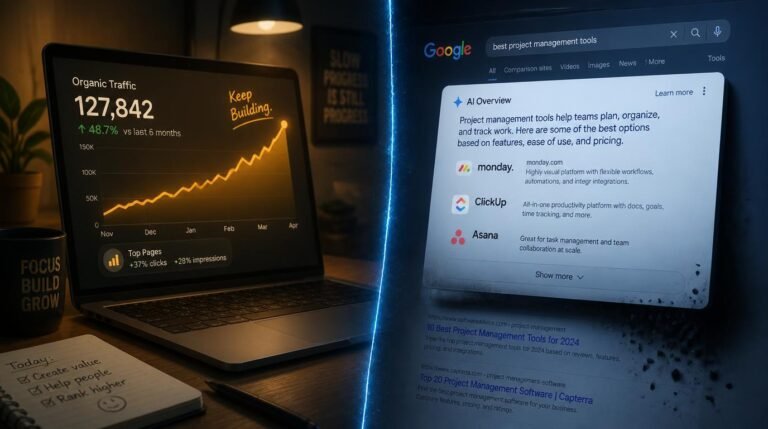
Here’s how to get traffic without backlinks on a new blog: you stop waiting for links you can’t earn yet and start winning the keywords nobody’s fighting over. That’s the counterintuitive part — most beginners believe search traffic is locked behind a wall of links. I believed it too, and it cost me months. The problem is real: a brand-new blog has zero authority, so it feels invisible.
And it stings, because you’ve poured hours into posts that eight people have read (three of them your mum). But the fix isn’t more links. It’s choosing the right battles, structuring pages the way search engines actually read them, and connecting your own content into a web that pulls its own weight. You searched this because you want visitors now, not “someday.” What you actually want is to feel like a real publisher — and you can get there before a single backlink shows up.
On this page
- Why Backlinks Aren’t the Gate You Think They Are
- Long-Tail Keywords: The Traffic Nobody’s Fighting For
- On-Page SEO That Earns Rankings Without Links
- Internal Linking: Your Blog’s Hidden Authority Engine
- Off-Search Promotion: Traffic While You Wait to Rank
- Advanced: The Topical Authority Play Most Blogs Skip
- Frequently Asked Questions
- My Top Recommended Gear
Why Backlinks Aren’t the Gate You Think They Are
A new blog can get traffic without backlinks by targeting long-tail, low-competition keywords with strong on-page SEO and a tight internal linking structure. Backlinks help you win harder terms later, but focused content that precisely matches search intent can rank and earn its first thousands of visitors before any links exist.
Ask most people how search works and they’ll tell you the site with the most links wins. That was mostly true in 2012. It isn’t the whole story now. Google’s own public guidance has shifted for years toward rewarding content that satisfies the person behind the query — helpful, reliable, people-first content, in their words. You can read the current framing straight from the source in Google’s creating helpful content documentation, and it says remarkably little about link counts and a great deal about usefulness.
So why does the “links or nothing” myth persist? Because links are how you win the crowded, high-value terms. If you want to rank for “best running shoes,” yeah, you’re going to need authority. But that’s the wrong fight for a new blog anyway. The whole game early on is finding the queries where authority barely matters — and those exist in enormous numbers. ngl, once this clicked for me, my traffic strategy stopped feeling hopeless and started feeling like a to-do list.
Long-Tail Keywords: The Traffic Nobody’s Fighting For
What’s the single highest-leverage move for a linkless blog? Picking keywords that established sites ignore. Long-tail keywords — specific, multi-word phrases like “how to get traffic without backlinks new blog” instead of just “blog traffic” — have lower search volume individually, but they add up, they convert better, and crucially, big sites rarely bother targeting them directly.
Here’s the part that took me too long to learn: search volume is a vanity trap. A keyword with 90 monthly searches and zero real competition will send you more actual visitors than a keyword with 40,000 searches where you’re stranded on page nine. Collectively, long-tail queries make up the majority of all searches, and that long tail is precisely where a new site can compete on merit rather than muscle.
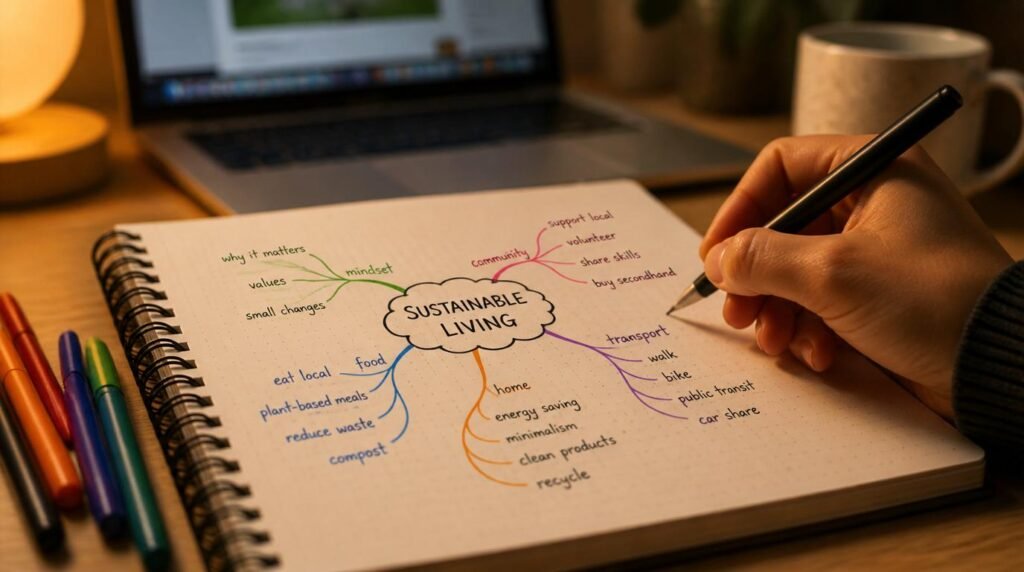
How do you find them? Mine the “People Also Ask” boxes, autocomplete suggestions, and the “related searches” at the bottom of the results page — those are Google handing you real queries for free. Then map deliberately: one keyword cluster to one page, no cannibalizing yourself. If you want the full walkthrough on this, I broke down the whole process in my guide to low-competition keyword mapping, which pairs directly with everything in this section.
How do I know if a keyword is actually low competition?
Type the phrase into Google and read the first page like a critic. Are the results giant brands, or are they forums, thin pages, and posts that don’t quite answer the question? Weak, off-target results on page one mean there’s a gap — and a gap is an invitation. A free keyword tool gives you a difficulty score, but your own eyes reading the actual results tell you more than any number.
On-Page SEO That Earns Rankings Without Links
Once you’ve chosen a keyword you can realistically win, on-page SEO is where you close the deal. This is the work that convinces a search engine your page deserves the spot — no links required. And most beginners get it half-right, which is the same as getting it wrong.
Start with intent, not keywords. Before I write a word, I search the target query myself and study what’s already ranking. Are the top results how-to guides? Lists? Definitions? That tells me what the searcher actually wants. If I write a rambling essay when everyone wants a numbered process, I lose — even if my keyword placement is flawless. Matching that intent is the foundation; if you’re brand new to this, my primer on blog SEO for beginners covers the fundamentals I’m building on here.
Then cover the topic completely. Google’s systems are increasingly good at recognizing when a page thoroughly satisfies a question versus when it skims. Answer the main query in the first 100 words, then anticipate the follow-up questions a real reader would ask next and answer those too. Use your headings as signposts — each H2 and H3 should read like something a human would actually type or say aloud.
- Title and first paragraph: put your primary phrase near the front, naturally, where a reader expects it.
- Descriptive headings: phrase subheads as real questions to capture voice and conversational search.
- Complete coverage: address the obvious next questions before the reader has to leave and search again.
- Clean technical basics: fast load times, mobile-friendly layout, and descriptive image alt text. Google’s page experience guidance is worth a read here.
TBH, this is the least glamorous part of the whole strategy and also the part that moves the needle most. Boring wins.
Internal Linking: Your Blog’s Hidden Authority Engine
If you can’t get other sites to link to you yet, what do you do? You link to yourself — strategically. Internal linking is the single most underused tool on new blogs, and it’s entirely within your control. No outreach, no begging, no waiting.
Every internal link does three jobs at once. It helps search engines discover and crawl your pages. It passes relevance and context between related posts, so your content reinforces itself as a coherent body of work rather than scattered orphans. And it keeps human readers moving deeper into your site, which lifts dwell time and lowers the odds they bounce back to the results page. That last signal matters more than people admit.
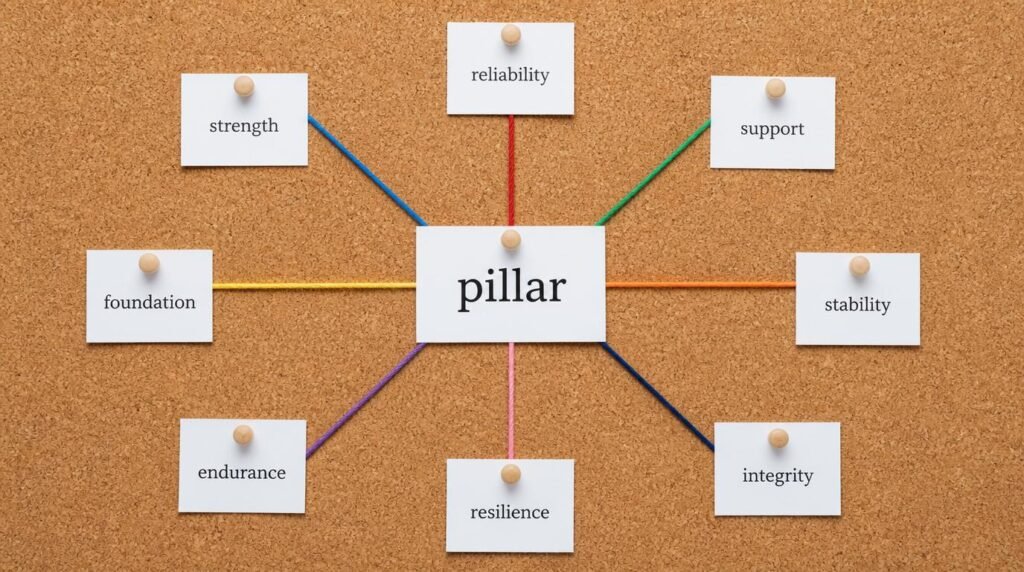
The mechanics are simple but people botch the anchor text. Never link with “click here.” Use descriptive anchor text that tells both the reader and the search engine what’s on the other end — the way I linked to my keyword mapping guide above. Aim for a natural rhythm: a couple of relevant internal links per post, pointing to genuinely related content, not stuffed in for the sake of it. Moz’s long-standing internal linking resource is a solid reference if you want to go deeper on the structure.
Off-Search Promotion: Traffic While You Wait to Rank
Search rankings take months to mature. So what feeds your blog in the meantime? Direct promotion to places your audience already gathers. This is how you get visitors this week, not next quarter — and those early visitors send engagement signals that quietly help your search performance too.
I don’t spray links everywhere. I pick two or three communities — a subreddit, a niche forum, a Slack or Discord, a relevant LinkedIn audience — and I actually participate. When I share a post, it’s because it genuinely answers a question someone asked. Distribution that reads as helpful gets welcomed; distribution that reads as spam gets you banned. Start an email list on day one, too, even if it’s twelve people. Those twelve are the most reliable traffic you’ll ever own, because no algorithm sits between you and them.
Advanced: The Topical Authority Play Most Blogs Skip
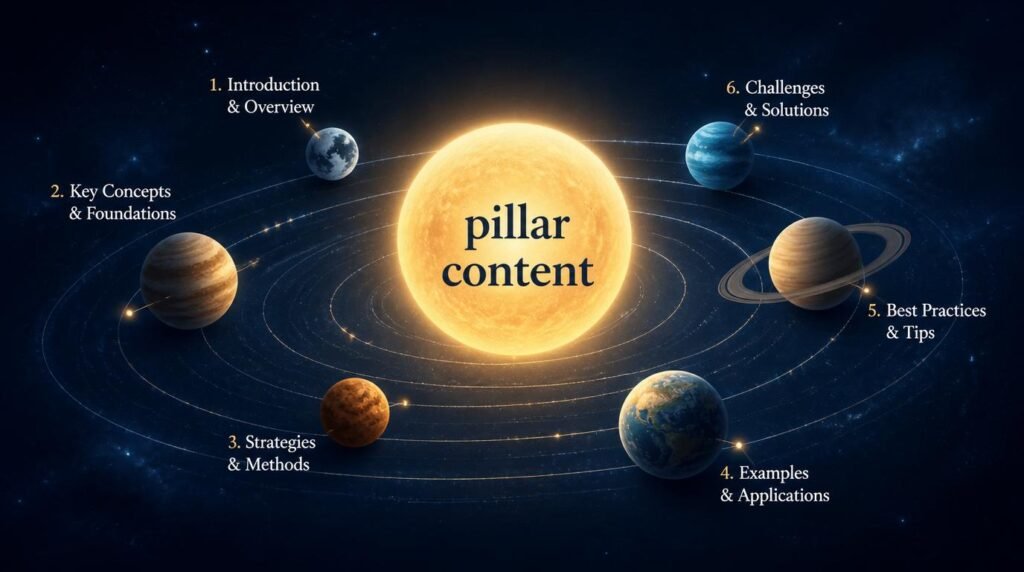
Here’s the tactic that separates blogs that plateau from blogs that compound: building genuine topical authority. Instead of publishing ten posts on ten unrelated subjects, I publish ten posts that orbit a single tightly-defined topic, then interlink them into a cluster around one central “pillar” page.
Why does this work so well without backlinks? Because it signals expertise to search engines through structure alone. When you cover a topic exhaustively and connect those pages, you demonstrate depth that a single scattered post never can — and depth is exactly what Google’s helpfulness systems are built to reward. It also reinforces E-E-A-T (experience, expertise, authoritativeness, trustworthiness), which academic work on search quality, including analyses hosted through resources like Google Scholar, has increasingly tied to how modern ranking systems evaluate content credibility.
The practical move: pick one narrow topic you can plausibly become the go-to resource for. Publish the definitive pillar page. Then publish supporting posts answering every sub-question around it, each linking up to the pillar and across to its siblings. It’s slower than chasing random keywords, but it builds an asset that keeps ranking new pages faster over time — the closest thing to compound interest that content has.
Expert Commentary: Drop in a walkthrough from an SEO practitioner who demonstrates real ranking data from a link-free site — the value here is watching someone show the keyword-selection and internal-linking process on-screen, which is far more convincing than reading about it. (Replace the placeholder ID with a video you’ve vetted.)
If you’re feeling the early-days discouragement right now — the empty analytics, the posts nobody reads — hold onto this: every large blog you admire started exactly where you are, with zero links and zero readers. The ones that made it didn’t get luckier. They picked winnable keywords, wrote genuinely useful pages, linked their work together, and showed up in the right rooms. That’s the entire playbook, and none of it required permission from anyone. 🙂
Frequently Asked Questions
Can a new blog get traffic without any backlinks?
Yes. A new blog can rank for long-tail, low-competition keywords using strong on-page SEO and internal linking. Backlinks help you compete for harder terms later, but they aren’t required to earn your first thousands of visits from search and community distribution.
How long does it take to get blog traffic without backlinks?
Most new blogs see their first meaningful search traffic within three to six months, assuming they publish focused content on low-competition keywords. Community and social distribution can drive visitors within days while search rankings mature in the background.
What is the fastest way to get organic traffic to a new blog?
The fastest route pairs two things: publishing content that answers specific, low-competition long-tail queries, and promoting each post directly to communities where your audience already gathers. That combines quick referral traffic with slower-building organic search rankings.
Do internal links help SEO without backlinks?
Absolutely. Internal links spread crawl access and relevance signals across your site, help search engines understand topic relationships, and keep readers moving between pages. On a backlink-free blog, a strong internal linking structure is one of your most powerful ranking levers.
Are backlinks still necessary for SEO in 2026?
Backlinks remain a ranking factor for competitive terms, but they’re no longer the entry ticket to search traffic. Well-matched intent, complete topical coverage, and clean technical SEO let a new site rank for plenty of queries before earning a single link.
My Top Recommended Gear
- Ergonomic Office Chair — I recommend this because keyword research and writing mean long sitting sessions, and back pain kills your consistency faster than any algorithm update.
- Blue-Light Blocking Glasses — I recommend these for the late-night editing sessions; they’ve noticeably cut the eye strain I used to get from staring at SERPs for hours.
- Mechanical Keyboard — I recommend this because when you’re publishing a full content cluster, a keyboard that makes typing feel good genuinely helps you write more.
Disclaimer: This post contains affiliate links. As an Amazon Associate, I may earn a commission from qualifying purchases at no additional cost to you. I only recommend products I’ve personally tested or rigorously researched.