
Black Friday Affiliate Marketing: 7 Powerful, Easy Wins

Black Friday affiliate marketing works best when your reader can make one confident purchase decision. For a small blog, that means choosing a specific audience, explaining a handful of relevant products, and keeping every recommendation accurate when offers change. A crowded page of discount buttons gives you far more maintenance work than useful differentiation.
This plan is written for independent bloggers preparing for November 27, 2026, with Cyber Monday following on November 30. Start with a guide you can maintain yourself. If you are beginning in late October, use your existing audience and useful content as the foundation; do not build your revenue forecast around a brand-new page ranking within a month.
Affiliate disclosure: As an Amazon Associate I earn from qualifying purchases. This article includes affiliate links to optional reading resources, at no additional cost to you. You can complete the workflow without buying them.
Table of Contents
1. Choose a narrow Black Friday affiliate marketing brief
Write the reader and the decision on one line: “Help a first-time podcast host choose a desk microphone that works with their current computer.” That gives you compatibility, desk space, recording conditions, and setup complexity to investigate. “Best Black Friday tech deals” gives you thousands of products to chase and little reason for a reader to choose your blog.
Review the categories your readers already visit. A cookware blog might compare pans for induction beginners; a travel blog might explain packing accessories for carry-on-only trips. Keep the seasonal angle inside your established expertise. Our affiliate marketing guide for bloggers covers the broader relationship between helpful content and relevant offers.
Give each candidate a simple editorial score: audience fit, existing evidence, reachable readers, and maintenance effort. Use a scale of one to three, and reverse the maintenance score so a manageable page performs better. These are your planning judgments, not keyword difficulty measurements. Reject an attractive product category when you cannot assess it responsibly.
A sensible Black Friday affiliate marketing brief also names the exclusion: no unverified deals, no invented testing, and no products added solely for a higher commission. Three well-supported recommendations can answer the task better than twenty shallow ones. Put the purchase criteria before the links so readers understand why the shortlist exists.
Optional resource: Content Inc., Second Edition is relevant if your main difficulty is defining an audience before choosing offers. Treat it as broader content-business reading, rather than a current manual for retailer rules or a requirement for this campaign.

2. Validate seasonal demand without confusing it with easy rankings
Black Friday affiliate marketing has a clear seasonal deadline, but the event’s popularity does not establish demand for your exact article. Google’s October 2026 When to Buy Guide draws on historical promotional patterns and search data. Its category-specific timing is a useful reminder that a blanket “buy everything on Black Friday” message can mislead readers.
For your niche, compare the product category, a specific buying question, and its holiday variation in Google Trends. Keep the country, time range, and search type consistent. Inspect several years for seasonality, then a shorter window for recent movement. A five-year chart answers a different question from the last thirty days.
Trends reports relative interest, not a verified monthly keyword volume. A small phrase can show a sharp increase from a tiny baseline. If the service has insufficient data, record that limitation and look for supporting evidence in Search Console, reader messages, and current search results. Do not turn missing measurements into a confident demand claim.
Read the visible results for your proposed question. Note whether the pages explain current model differences, show evidence, identify unsuitable buyers, and answer delivery or compatibility questions. A weakness you can fix is a stronger brief than an assumption that every smaller website will be easy to outrank.
Use our keyword mapping process to give one page ownership of one decision. For Black Friday affiliate marketing, useful supporting phrases include “holiday affiliate content,” “affiliate gift guide,” “seasonal content calendar,” and “affiliate link audit.” Work them into relevant explanations rather than making four near-identical pages.
The official Google Search Central video below explains the Trends comparison workflow. Use it to evaluate your own niche; it does not predict this article’s traffic or establish a guaranteed ranking opportunity.
In its November 2025 Holiday 100 announcement, Google reported more than 1 billion shopping-related searches per day. That is platform-wide context, not volume for Black Friday affiliate marketing or your chosen niche. Use the scale as a reason to investigate specific buying questions, not evidence that a small blog will capture them.
3. Build a calendar you can actually maintain
Organize your Black Friday affiliate marketing calendar around four checkpoints: prepare the evidence, make the guide reviewable, verify the live offers, and review the outcomes. Black Friday affiliate marketing becomes fragile when all four jobs are left for the holiday morning. Assign an owner and a completion test to each checkpoint, even when that owner is you.
From late October into early November, choose your audience, shortlist products, confirm affiliate access, and assemble your comparisons. During the following two weeks, finish the article and prepare promotional messages. In the final week, verify any offer before describing it as live. These are practical working windows, not promises about how long Google takes to rank content.
For a late start, prefer a useful existing article you are authorized to refresh. Our content refresh workflow explains how to assess that choice. If the reader task remains the same, keep its stable address and improve the evidence. A new seasonal guide still makes sense when it answers a distinct question.
Create an offer log with product name, model or edition, destination, affiliate identifier, evidence source, last check, offer end, and fallback action. Set a realistic checking frequency based on what you claim. A Black Friday affiliate marketing page promising live deals requires more attention than a guide to deciding which features matter.
Reserve an explicit post-event task. Remove expired promotions, preserve useful buying advice, and note what should return next year. Black Friday affiliate marketing should leave you with a better evergreen asset, rather than a page full of abandoned countdowns.
4. Make recommendations readers can interrogate
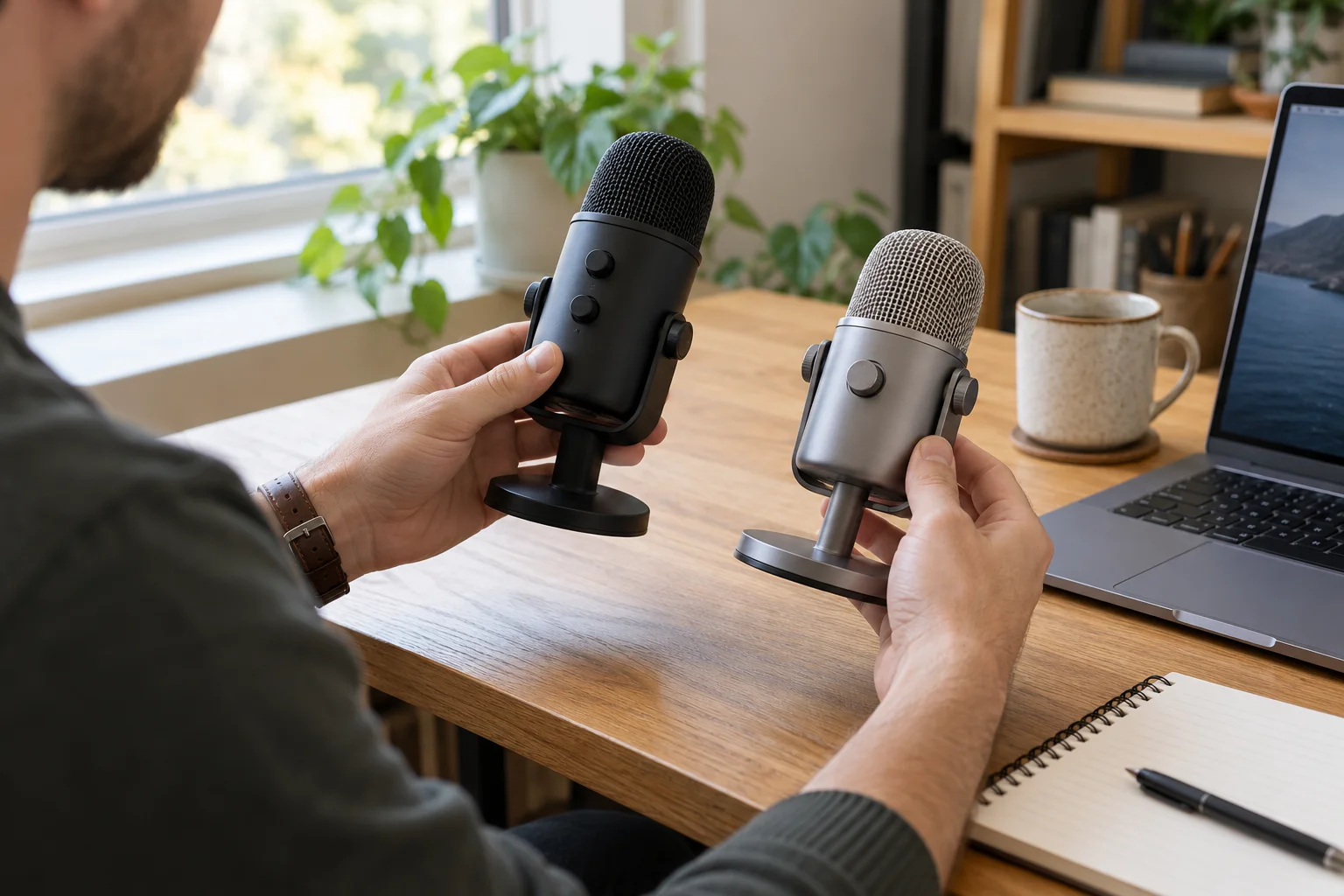
For Black Friday affiliate marketing comparisons, choose criteria before choosing a winner. For the microphone example, record connection type, required adapters, desk footprint, monitoring options, and the conditions of any recording test. Separate manufacturer specifications from your observations. If you have not used a product, describe the piece as a researched comparison and explain its evidence limits.
Google’s reviews system documentation emphasizes insightful analysis and original research. That supports a practical editorial rule: give readers something beyond the retailer description. A photo showing cable clearance or a clear explanation of a compatibility limitation can be more useful than another adjective about quality.
A Black Friday affiliate marketing recommendation template
For each item, answer five questions: who should consider it, which task it solves, what supports that judgment, what limitation matters, and what the reader should verify at the retailer. Keep the same questions across competing products. Consistency lets the reader compare rather than decode three different sales pitches.
Add a “skip this if” sentence. A portable microphone may be a poor fit for someone who needs several speakers recorded at once. A discounted annual software plan may be wasteful for a reader who needs the tool for one project. Your Black Friday affiliate marketing page earns trust by making these boundaries visible before the click.
Use original product photos when available. Our phone photography guide for bloggers can help you document physical details. Illustrative generated images can support an article’s presentation, but they are not proof of ownership, product testing, or measured performance.
Optional resource: Epic Content Marketing, Second Edition suits bloggers who need to turn a generic promotional angle into a clearer editorial story. It is broader strategy reading; use primary sources for current search and affiliate requirements.
5. Verify offers, disclosures, and the destination
A Black Friday affiliate marketing link audit starts with the correct product. Open the destination and confirm the model, edition, configuration, marketplace, and any conditions that affect your wording. A listing for a basic model does not support a recommendation written about its premium sibling. Keep a simple text link available when a decorative button creates confusion.
For Amazon links, the current Associates Program Policies specify how price and availability information may be displayed. The straightforward approach for a manual guide is to omit copied prices and invite the reader to check the current offer at Amazon. A dated price typed from a browser is not automatically an authorized implementation.
The same policies require expired limited-time promotion references to be removed. Do not call an item a Black Friday deal merely because it has an affiliate link. Black Friday affiliate marketing can recommend a suitable product without claiming that it is discounted, cheapest, or selling out.
Place a clear disclosure near the first affiliate recommendation. Amazon’s disclosure guidance distinguishes disclosing links from identifying yourself as an Associate. Keep that explanation easy to notice on a phone, rather than hiding the relationship behind a vague label such as “support us.”
Mark paid affiliate relationships with rel="sponsored nofollow" as used on this page. That technical attribute does not replace a reader-facing disclosure. For any other retailer, check that program’s own rules instead of assuming Amazon’s requirements apply everywhere.
Finish the Black Friday affiliate marketing audit by testing every call to action on mobile. Check the link’s destination and tracking tag without making a purchase or asking someone to buy merely to test attribution. A visible tag confirms formatting; commission eligibility still depends on the program’s rules and reporting.
6. Promote the decision, then measure the path
Give each Black Friday affiliate marketing message one useful answer. “Three checks before buying your first desk microphone” gives a reader a reason to visit. “Huge deals inside” creates a promise you must continuously substantiate. Send readers to the comparison section that matches the message, while keeping the disclosure and context easy to find.
Use the channels you already maintain. A newsletter can introduce the buying criteria, a short video can show one physical limitation, and a social post can explain who should skip an option. You do not need to launch three unfamiliar channels to run a small Black Friday affiliate marketing campaign.
Track article visits, relevant outbound clicks, and the merchant’s reported qualifying orders separately. These stages answer different questions. A guide can attract readers who are researching without producing immediate purchases, and a retailer report may use definitions or timing that differ from your analytics.
Here is a hypothetical calculation, not a forecast: 500 article visits multiplied by a 20% outbound click rate produces 100 merchant clicks. If three become qualifying orders and the average eligible commission is $4, the result is $12 before costs and later adjustments. Changing any assumption changes the result.
Use this model to set a sensible effort budget. Ten hours of deal maintenance is difficult to justify from a tiny traffic base unless the work also improves a valuable evergreen page. Black Friday affiliate marketing should be judged against the time it consumes, not just a screenshot of gross commissions.
Optional resource: Content Chemistry, 7th Edition covers content marketing, SEO, email, and analytics. It is a relevant reference if you want to connect your seasonal article to a longer-term measurement routine, rather than judge success from one promotional weekend.

7. Keep the useful page after the sale
After Cyber Monday, review the time-sensitive promises in your Black Friday affiliate marketing content. Remove expired codes and urgency claims, verify the recommendations still fit the reader, and keep explanations that remain useful. If a product disappears, explain the relevant replacement criteria before swapping in an unrelated bestseller.
Record which questions generated useful visits, which links received clicks, and which offers produced qualifying revenue after adjustments. Compare similar periods where possible and acknowledge differences in audience size or promotion. A better result after an edit does not establish that the edit alone caused it.
Give next year’s Black Friday affiliate marketing plan three notes: what deserves to stay, what required too much maintenance, and what evidence you wish you had collected earlier. Keep the URL stable when the task stays stable. Reusing a useful page is different from merely changing its year and calling it updated.
Frequently asked questions
When should bloggers start Black Friday affiliate marketing?
Begin early enough to research and maintain the guide before promotions arrive. If you start in late October, prioritize a focused page and your existing audience. Do not assume a new article will rank in time for November sales.
Can a small blog earn affiliate commissions on Black Friday?
It can, but traffic, reader intent, product fit, commission rules, and maintenance all affect the result. Build a simple scenario using your own data and include the cost of your time. Earnings are not guaranteed.
Should I publish a gift guide or a live deals page?
Choose a gift guide when you can explain the reader’s decision and maintain a stable shortlist. Choose live deals only when you can verify offers frequently and remove expired claims promptly. A small blog rarely needs both immediately.
Can I copy Amazon prices into my affiliate article?
Do not assume that manually copied prices are permitted. Amazon restricts how price and availability information may be displayed. Use an authorized implementation that meets the current policies, or omit prices and link to the retailer’s current listing.
Does Google Trends show monthly keyword search volume?
No. Trends shows relative search interest rather than a verified monthly search count. Keep country and time filters consistent, check seasonal patterns, and use other evidence before treating a rising phrase as a viable article opportunity.
Should I delete my Black Friday page after the event?
Usually preserve it when the buying advice remains useful. Remove expired promotional claims, check recommendations, and document improvements for the next season. Consider removal separately if the page no longer serves a meaningful reader task.
Choose one reader, one buying decision, and one page you can keep accurate. That is a manageable Black Friday affiliate marketing campaign. Finish the evidence and link checks before expanding the shortlist, then use what readers actually do to improve the next version.