E-E-A-T for Bloggers:Why the Skeptics Are Wrong

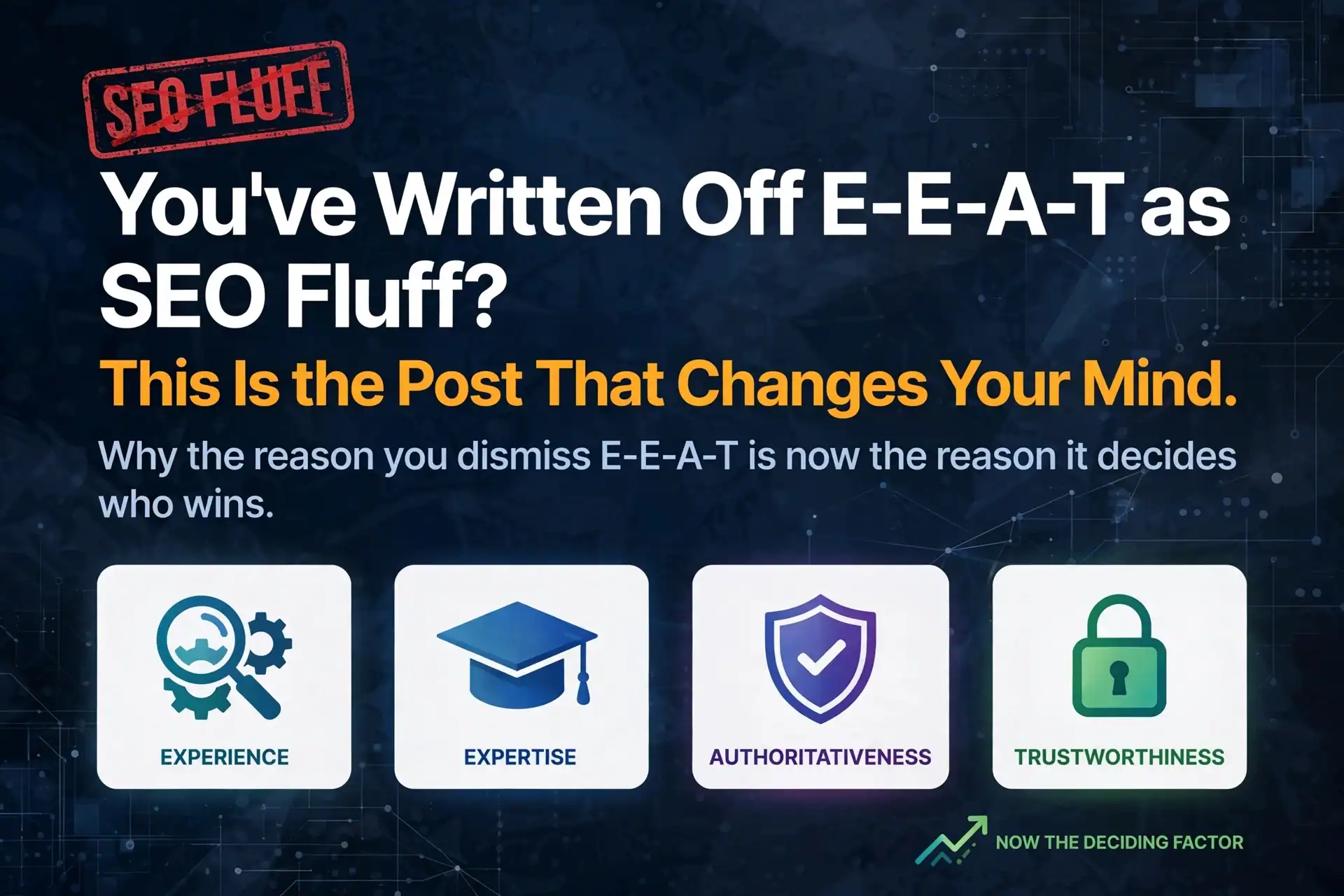
If you’ve written off E-E-A-T as SEO fluff, this is the post that changes your mind. You’ve heard the advice a hundred times: “Focus on E-E-A-T.” And you rolled your eyes. You’ve watched thin AI content outrank your best work. You’ve read Google’s own words: “E-E-A-T is not a ranking factor.” So you filed it under buzzword and moved on. I get it. You’ve been burned. But give me five minutes, because the reason you dismiss E-E-A-T is the exact reason it now decides who wins. Let me prove it.
Table of Contents
Is E-E-A-T a Google Ranking Factor?
No, E-E-A-T is not a direct Google ranking factor — there is no E-E-A-T score in the algorithm. But it is the framework Google’s ranking systems are built to reward. E-E-A-T describes the signals of trust that real ranking factors measure, which is why building for it lifts your rankings.
Here’s the line every skeptic clings to. Google says there is no E-E-A-T score. No dial. No number in the algorithm. True. And it’s also the most misread fact in all of SEO.
E-E-A-T isn’t the machine. It’s the blueprint the machine was built to copy.
Picture a restaurant health inspector. They don’t have a “cleanliness score” wired into their brain. They use a checklist. They look for signs of a clean kitchen. Google works the same way. It can’t measure trust head-on, so it hunts for the marks trust leaves behind. E-E-A-T names those marks. Build for it, and you leave the exact signals the algorithm was trained to reward. Google spells this out in its own guidance on creating helpful, people-first content.
So “not a ranking factor” doesn’t mean “doesn’t matter.” It means the opposite. It’s the target every ranking factor is aiming at. If the way Google actually ranks pages still feels like a black box, get the fundamentals down first with this guide to blog SEO for beginners — the rest of this post lands harder once they click.
Why AI Content Made First-Hand Experience Priceless
Now the part critics never want to face. The internet is drowning in AI content. Anyone can spin up 500 blog posts before lunch. Every keyword you want is buried under an avalanche of decent-sounding, soulless text.
So ask one question. In that flood, what can’t be faked at scale? Real experience. The first “E” in E-E-A-T.
An AI can describe how an espresso machine works. It can’t tell you that the steam wand on the Gaggia clogs after three months of hard water. Because it never owned one. You did. You have the photo of the scale buildup. You have the fix you figured out at 6am before work. That’s the moat. That’s the thing a thousand content farms can’t copy.
Google knows this. It’s the whole reason they added the extra “E” for Experience back in December 2022. They’re desperate to find the humans in the noise. Their own guidance on AI-generated content says the same thing: ranking systems reward original, high-quality work that demonstrates E-E-A-T, no matter how it’s produced. AI still has a place in your workflow — just for research and speed, not for faking experience you don’t have. That’s the line these AI tools for bloggers are built to respect.
Every skeptic says content quality doesn’t matter anymore. They have it backwards. Proof of lived experience is now the scarcest thing online. Scarce things win.

How Google’s Search Quality Raters Use E-E-A-T
Let’s kill another myth: that E-E-A-T is just Google marketing to make small creators feel warm inside. It isn’t. It’s a working document used by real people.
Google employs thousands of Search Quality Raters. Their job is to grade search results by hand. Their instruction manual — the Search Quality Rater Guidelines — runs over 170 pages, and Google publishes the whole thing openly online. You can read the exact rubric your page is judged against. E-E-A-T is the heart of it.
These raters don’t change your ranking directly. But their scores train the algorithm. They tell Google’s engineers, “this result is good, this one is garbage.” The machine learns from those grades.
So when you ignore E-E-A-T, you’re not ignoring a slogan. You’re ignoring the exact scorecard humans use to judge your page. Would you sit a test after refusing to read how it’s graded? That’s what skipping E-E-A-T is.
What E-E-A-T Stands For (In Plain English)
Forget the jargon. Here’s what each letter really asks about your blog.
- Experience. Have you actually done the thing? Used the product, visited the place, lived the problem?
- Expertise. Do you know your subject deeply — not just well enough to paraphrase Wikipedia?
- Authoritativeness. Do others in your field point to you? Links, mentions, a name people recognize?
- Trustworthiness. Can a reader believe you? Honest reviews, clear sourcing, no shady tricks.
Notice something. None of these require you to be a giant corporation. A mom blogging about her kid’s peanut allergy has more Experience than any health mega-site. A retired electrician writing about wiring has more Expertise than a freelancer paid $15 a post.
That’s not a disadvantage for small bloggers. It’s your unfair edge.
Do Big Brands Always Win at SEO?
This is the skeptic’s strongest punch, so let’s meet it head-on.
Yes, big sites often rank. But look closer at why they lose ground when they slip. Trustworthiness — the T — is the most important letter of the four. Google says so plainly in its own guidelines. And trust is the one thing money can’t just buy.
Huge brands crash all the time. When a big publisher pumps out cheap affiliate content, traffic tanks. When a “healthy living” site posts medical claims with no doctor behind them, it drops. Size isn’t the shield you think it is. Demonstrated trust is.
And here’s the flip. A tiny blog with a real author, real experience, and honest reviews can leapfrog a bloated brand that faked its way up. I’ve watched a solo food blogger outrank a national media company on the same recipe. Why? Her post had her hands in the photos, her exact oven temp, and a note about the batch that failed. The brand had a stock image and a wall of text. Trust won. It usually does now. That’s what an honest, first-hand review looks like — the kind that names what a product gets wrong, not just what it gets right, like this hands-on Kadence theme review.
How Google Core Updates Reward E-E-A-T
You don’t have to take my word for it. Look at the graveyard.
Every few months Google rolls out a core update or a helpful content update. Sites live or die overnight. Study the survivors, then study the casualties. The same pattern shows up every single time.
The sites that got crushed shared these traits:
- Faceless authors, or fake ones with stock-photo headshots
- Content that recycled other pages with nothing new added
- Reviews written by people who clearly never touched the product
- No sourcing, no credentials, no reason to trust a word
The sites that grew shared the opposite:
- Real, named authors
- First-hand testing
- Honest opinions, flaws included
That’s E-E-A-T in action, whether Google names it or not. Every Google core update is just E-E-A-T with teeth. If you dismissed it and got hit, that wasn’t bad luck. It was the rubric, doing its job.
Why E-E-A-T Frees Bloggers to Write Like Humans
Here’s the part believers feel in their gut but rarely say out loud. E-E-A-T isn’t really an SEO tactic. It’s permission to stop pretending.
For years, “SEO advice” told bloggers to strip out their personality. Hit the keyword density. Match the top result. Sound like everyone else. It made the whole internet gray and hollow. And it made you hate writing.
E-E-A-T flips that. It rewards the very things that make you you. Your scars. Your stories. Your strong opinions. The mistake you made so your reader doesn’t have to.
The skeptic thinks E-E-A-T is extra work. It’s the opposite. It’s the freedom to write like a human again — and get paid in rankings for it.
How to Show E-E-A-T on Your Blog Without Faking It
You can’t game this. But you can prove it, fast — and it’s easier when your post already sits on a blog post structure built to earn trust. Start here.
- Put your name and face on it. A real author bio with real credentials beats “admin” every time.
- Show your work. Add your own photos, screenshots, and results. Proof you were there.
- Say the hard truth. Name the product’s flaws. Honest reviews build more trust than glowing ones — the same rule that makes affiliate marketing for bloggers actually convert.
- Cite real sources. Link to studies and experts, not just other blogs.
- Tell the story only you can. The failed attempt. The weird fix. The lesson learned.
None of this needs a budget. It needs honesty and a little effort. That’s why the skeptic’s last excuse falls apart. “I don’t have the resources to compete.” You don’t need them. You need to stop hiding the one thing you already have. Yourself.
E-E-A-T for Bloggers: Your Next Move
Here’s what your competitors can’t steal: the truth. They can copy your keywords, your layout, even your headline. They can’t copy the morning you spent unclogging that steam wand, or the recipe that flopped three times before it worked. That’s exactly what E-E-A-T rewards, and it’s the one edge that has to be real to exist.
So go open your best-performing post right now. Add your name and face, one photo from your own hands, and one honest flaw you’ve been too polite to mention. One page. Today. Then watch what the next update does. The skeptics will still be arguing on Twitter. You’ll be ranking.