
Best AI Writing Tools for Bloggers in 2026 (Real Comparison)

If you’re hunting for the best AI writing tools for bloggers in 2026, you’ve probably already been burned. You typed a prompt, got back a wall of soulless mush, and closed the tab. Maybe you even published one of those posts. Then you watched it sink like a stone.
So let’s be honest up front. You’re not here for hype. You’ve heard “10x your content” a hundred times. You’re here because you’re tired, you’re behind on your calendar, and part of you suspects AI is the reason blogs feel worse than ever.
I’ll make the case anyway. I write for a living, and I’ve run every tool on this list against my own drafts — the winners and the ones I dropped after a week. The best AI writing tools for bloggers in 2026 are not the toys you tried in 2023. And the writers using them well aren’t producing garbage. They’re quietly eating your lunch.
Stick with me. I’ll show you the exact tools, what each one is actually good at, and why the “AI content is trash” story is mostly a story about people using the wrong tool the wrong way.
Table of Contents
Why Most Blogs Fail — And Where AI Writing Tools Help
Let’s start with the thing nobody wants to say out loud. Most blogs don’t fail because the writer ran out of ideas. They fail because the writer ran out of hours.
The 2025 Orbit Media survey of more than 1,000 bloggers found the average post now takes about 3.5 hours to write. That’s just the writing. It doesn’t count research, images, SEO, or promotion.
Now picture a real growth schedule. Most guides say publish three to four times a week. Write that out and it’s about 12 to 15 hours at the keyboard, every week. Add editing and promotion on top. You’ve just built a second full-time job.
No wonder about half of all marketers only publish two to four times a month. That’s not enough to build traction — or the kind of traffic that actually makes money. And it’s not a discipline problem. It’s a time problem.
Here’s the part the skeptics skip. AI doesn’t fix the “ideas” gap. It fixes the hours gap. And the hours gap is what’s actually killing your blog.
Is AI Writing Just Generic Content? Not Anymore
Fair. You’ve seen the output. The em-dashes. The “in today’s fast-paced world.” The paragraphs that say nothing in a confident voice.
But here’s what you’re really reacting to. You’re reacting to people who typed “write a blog post about X” and hit publish. That’s not AI writing. That’s laziness with extra steps.
Think of it like a camera. Hand a stranger a $4,000 camera and they’ll still take a blurry photo of their thumb. The camera isn’t the problem. The workflow is.
The bloggers winning in 2026 don’t ask AI to be the writer. They use AI writing software to kill the slow, mechanical parts:
- First drafts and outlines
- Research, and summarizing 20 tabs into one page
- Turning one post into ten social snippets
- Catching the typos and clunky lines you stopped seeing three reads ago
Then they spend the saved hours on what AI can’t fake. Real experience. A point of view. Actual expertise. The exact things that make a post rank and get shared.
That’s the shift. AI is not the writer. It’s the assistant that clears your desk so you can do the writing only you can do.
Prefer to see the workflow before you read the picks? This 2026 walkthrough shows how to draft with Claude and ChatGPT without the robot voice:
The Best AI Writing Tools for Bloggers in 2026
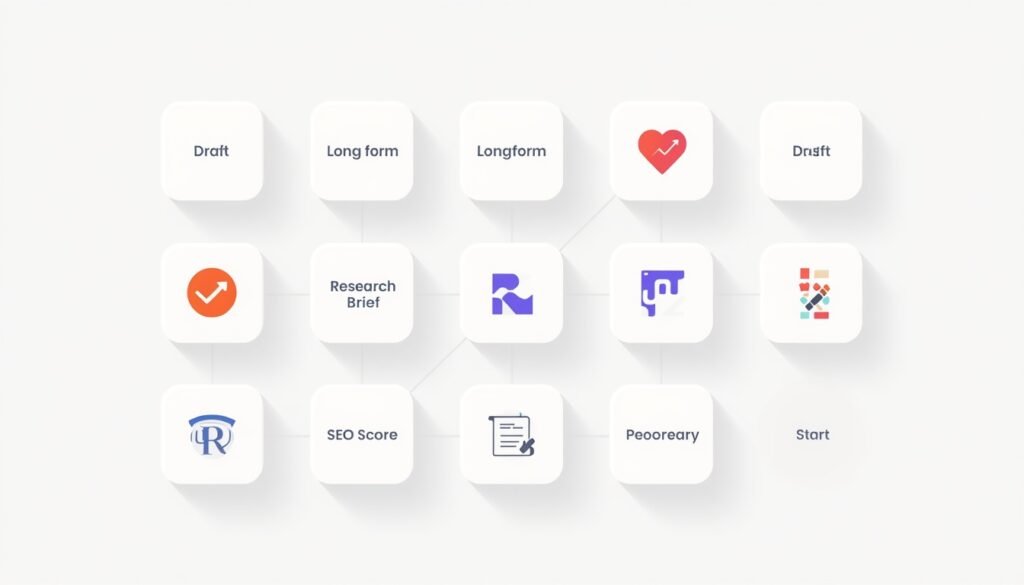
The best AI writing tools for bloggers in 2026 are:
- ChatGPT (GPT-5.5) — fast drafts and ideation
- Claude (Opus) — long-form blog writing
- Jasper — brand voice at scale
- Surfer SEO — SEO content optimization
- Frase — research briefs
- Perplexity — cited research
- RightBlogger — all-in-one blogging workflow
- Grammarly — final editing and polish
Notice something: nobody serious uses just one. And to be clear, these aren’t affiliate picks dressed up as advice — they’re the tools I actually keep open in my browser. Here’s what each one is genuinely good at. <!– IMAGE 2 (in-content: the toolkit) — replace with generated image –>
ChatGPT (GPT-5.5): Best AI Tool for Fast Drafts
OpenAI’s flagship since April 2026 is the tool most bloggers reach for first. It’s fast, it brainstorms well, and it turns a messy idea into a working outline in seconds. Use it for ideation, quick drafts, and reworking angles. Plus is around $20 a month. It won’t nail your voice on its own, but as a thinking partner, it’s hard to beat.
Claude (Opus): Best AI Writing Tool for Long-Form Blogs
If you write anything longer than 1,500 words, Claude is your tool. Bloggers consistently report that it holds structure across a long-form blog post and hallucinates less than the alternatives. It reads more like a careful human and less like a robot showing off — and if the drafts come back stiff, here’s how to use Claude for blog writing without the robot voice. Pro runs about $20 a month. For meaty guides and pieces where accuracy matters, route the work here.
Jasper: Best AI Writing Tool for Brand Voice
Jasper grew up. In 2026 it ships with 100+ specialized agents and Content Pipelines that carry a post from idea to publish. Its Brand Voice feature is still the best “teach the AI to sound like me” tool on the market. The Creator plan starts around $49 a month. It’s overkill for a hobby blog. For a marketing team pushing consistent, on-brand content at scale, it earns its price.
Surfer SEO: Best AI Tool for SEO Content Optimization
Writing is half the battle. Surfer SEO scores your draft against what already ranks and tells you what’s missing. It’s the difference between “good post” and “good post that shows up on page one.” Plans start around $79 a month. If organic traffic is your goal, this SEO content optimization tool isn’t optional — pair it with the blog SEO fundamentals every beginner should nail first.
Frase: Best AI Tool for Blog Research and Briefs
Frase pulls together the top-ranking pages on your topic and builds you a research brief in minutes. It’s the tool that stops you from staring at a blank page wondering what to even cover. Pair it with your drafting tool and you skip the most painful part of the process entirely.
Perplexity: Best AI Research Tool With Citations
When accuracy is non-negotiable, Perplexity searches the live web and attaches a citation to every claim. No more “did the AI just make that up?” You can click and check. For stats, case studies, and anything factual, this is your safety net.
RightBlogger: Best All-in-One AI Blogging Tool
If juggling six tools sounds exhausting, this one bundles the workflow into a single place. RightBlogger is built specifically for bloggers, with 75+ writing tools, custom voice profiles, and SEO features under one login. It’s a strong pick for solo bloggers who want less tab-switching and one predictable bill. You trade a little best-in-class power for a lot less friction.
Grammarly: Best AI Tool for Final Editing and Polish
Nobody catches every error in their own writing. Grammarly is the last pass that scrubs the typos, tightens the clunky lines, and flags the sentence you rewrote four times and still hate. It’s cheap, it’s fast, and it makes everything you publish look more professional.
Will Google Penalize AI-Generated Blog Content?
This is the fear that keeps most skeptics frozen. So let’s kill it directly.
Google’s own guidance is clear: it rewards helpful, high-quality content, no matter how it’s made. There is no rule that says “AI bad, human good.” The rule is “unhelpful, mass-produced junk bad.”
The sites that got hammered weren’t punished for using AI. They were punished for pumping out hundreds of thin, generic, nobody-needs-this pages. Those pages would have tanked if a human wrote them too.
Here’s the honest version:
- Publish AI slop with no edits, no expertise, no point of view? You’ll get buried. Correctly.
- Use AI to draft faster, then add your experience, your data, your voice? You’ve built something better than the human-only writer working twice as slow.
The tools even help you police this. Detection scanners flag when a draft reads too machine-like, so you know exactly where to add a human touch before you publish. AI isn’t a shortcut around quality. It’s a shortcut to quality — if you actually do the last mile.
Will AI Writing Tools Erase Your Writing Voice?
This is the one that stops good writers cold. Your voice is the thing. It’s why people read you and not the other 900 blogs on your topic. So handing it to a machine feels like handing over your soul.
I get it. But this fear is built on the 2023 version of these tools. It’s out of date.
Modern AI writing tools don’t force a house style on you. They learn yours. Feed Jasper’s Brand Voice a few of your best posts, and it studies your rhythm, your slang, the way you open a paragraph. Then it drafts in that — not in robot-speak.
Here’s the mindset shift that fixes this for good. You’re not asking AI to write as itself. You’re asking it to write as you, faster. The draft is clay, not a statue. You still shape the final thing.
Your voice doesn’t live in the first draft anyway. It lives in the edit. The aside. The joke only you would make. A blank page has no voice either. Start from a rough draft that’s 70% there, and you get to spend your energy on the 30% that sounds like nobody but you. That’s more voice on the page, not less.
The writers who lose their voice to AI are the ones who publish the first draft. Don’t be that writer. Use the draft as a launchpad, and your voice gets louder, not quieter.
The Best AI Writing Tool Stack for Bloggers
You don’t need all eight tools. Tool sprawl is real, and it’ll drain your wallet and your attention. Here’s how working bloggers combine the best AI writing tools for bloggers in 2026. <!– IMAGE 3 (in-content: the workflow) — replace with generated image –>
The lean starter stack (under $50/month):
- Claude or ChatGPT for drafting and research
- Grammarly for polish
Start here. Get comfortable.
The growth stack (serious about traffic):
- Claude Opus for long-form drafts
- Frase or Perplexity for research
- Surfer SEO for optimization
- Grammarly for the final pass
The team stack (15+ posts a month):
- Jasper for brand-consistent drafting at scale
- Surfer or Clearscope for SEO
- A detection scanner to check freelance work before it ships
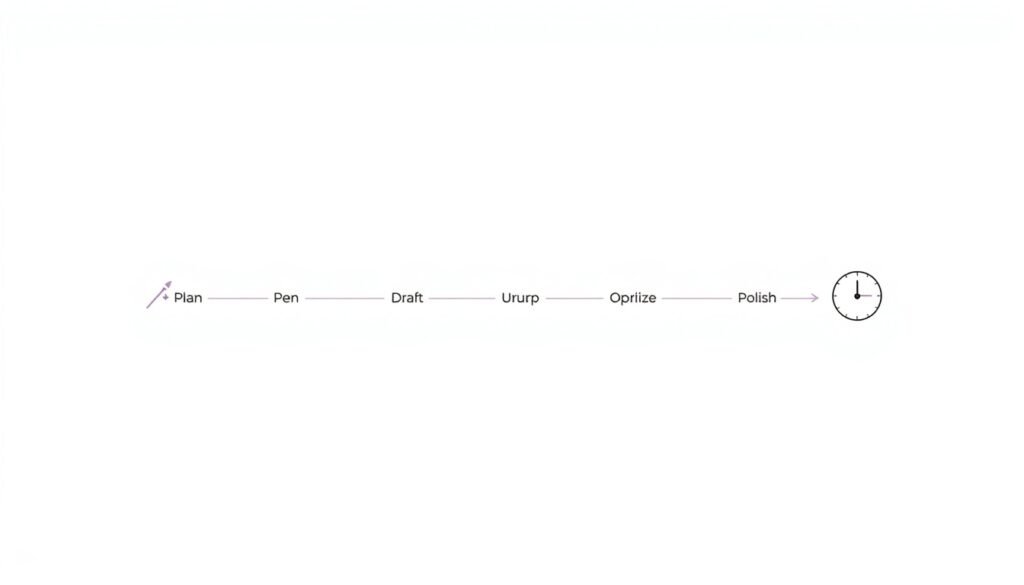
The pattern is always the same. One tool to plan. One to draft. One for SEO. One to polish. Each does one job well. Together they cut a 3.5-hour post down to something you can actually sustain.
One note before you go shopping: prices and model names shift fast in this space. Most of these tools offer free trials, so test each one on the same sample post before you commit a dollar.
How to Start With AI Writing Tools This Week
Here’s what nobody selling you a course will admit. The bloggers pulling ahead in 2026 aren’t better writers than you. They just stopped spending three hours on work an AI writing tool does in twenty minutes — and poured those hours into the voice, expertise, and consistency that actually rank.
The best AI writing tools for bloggers don’t replace you. They clear your desk so you can do the part only you can do. So here’s your one move: pick a single drafting tool from this list, start its free trial, and run a stalled draft through it before you close your laptop tonight. Draft, research, polish. You’ll finish in half the time — and it’ll still read like you wrote every word.